
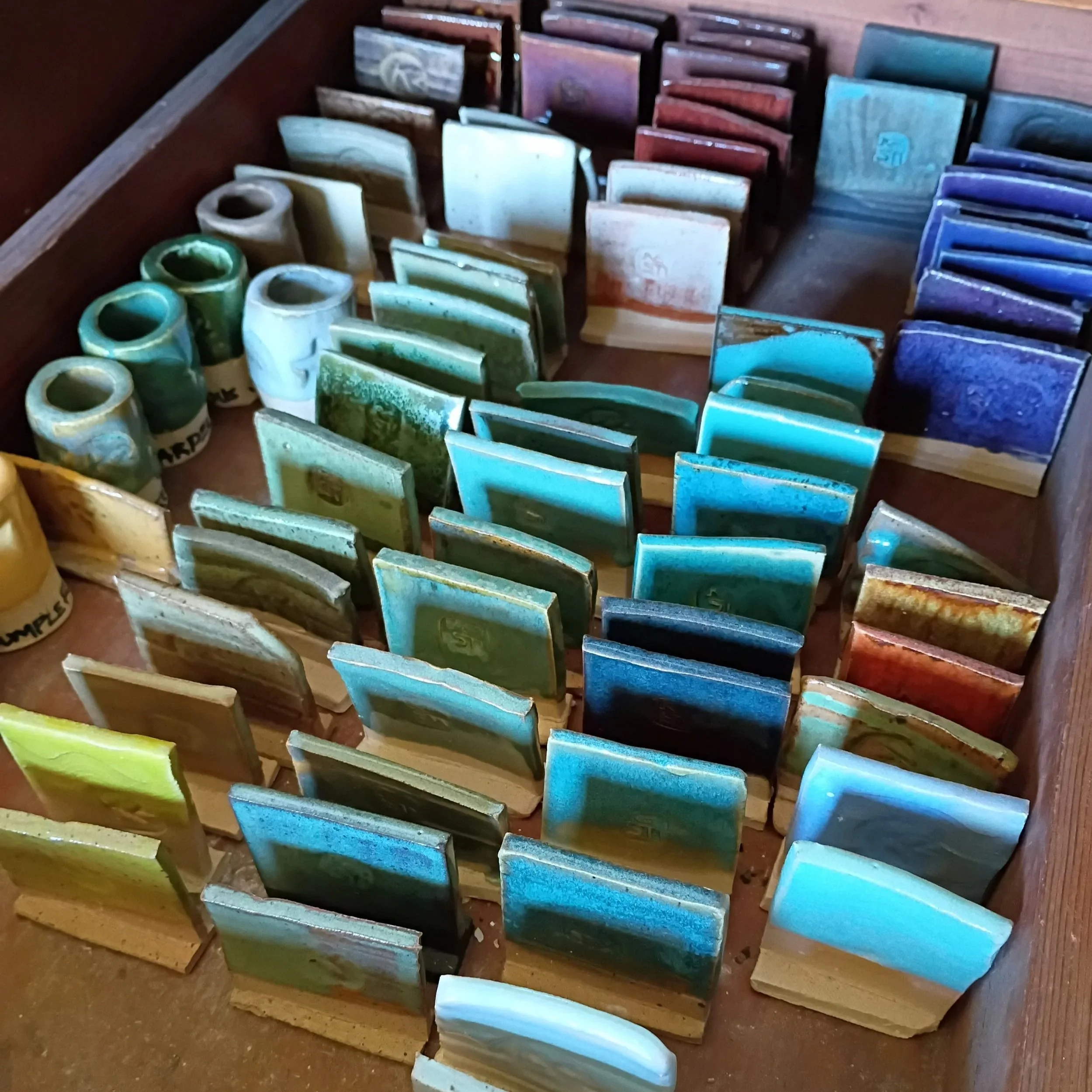
In 2022, I wrote about making my own pottery glazes here and here from raw materials. Commercial bottled glazes were convenient, but expensive, and I had an itch to develop something more personal. In over seven years of experimentation, I’ve come to understand the qualities I’m after—the colors, the opacities, the way a glaze can float or move across the surface like something alive within the glass.
Through that process, I’ve also learned which glazes truly hold my attention. So I’ve decided to really streamline my recipes, letting go of the ones that sit untouched on the shelf until they dry out.
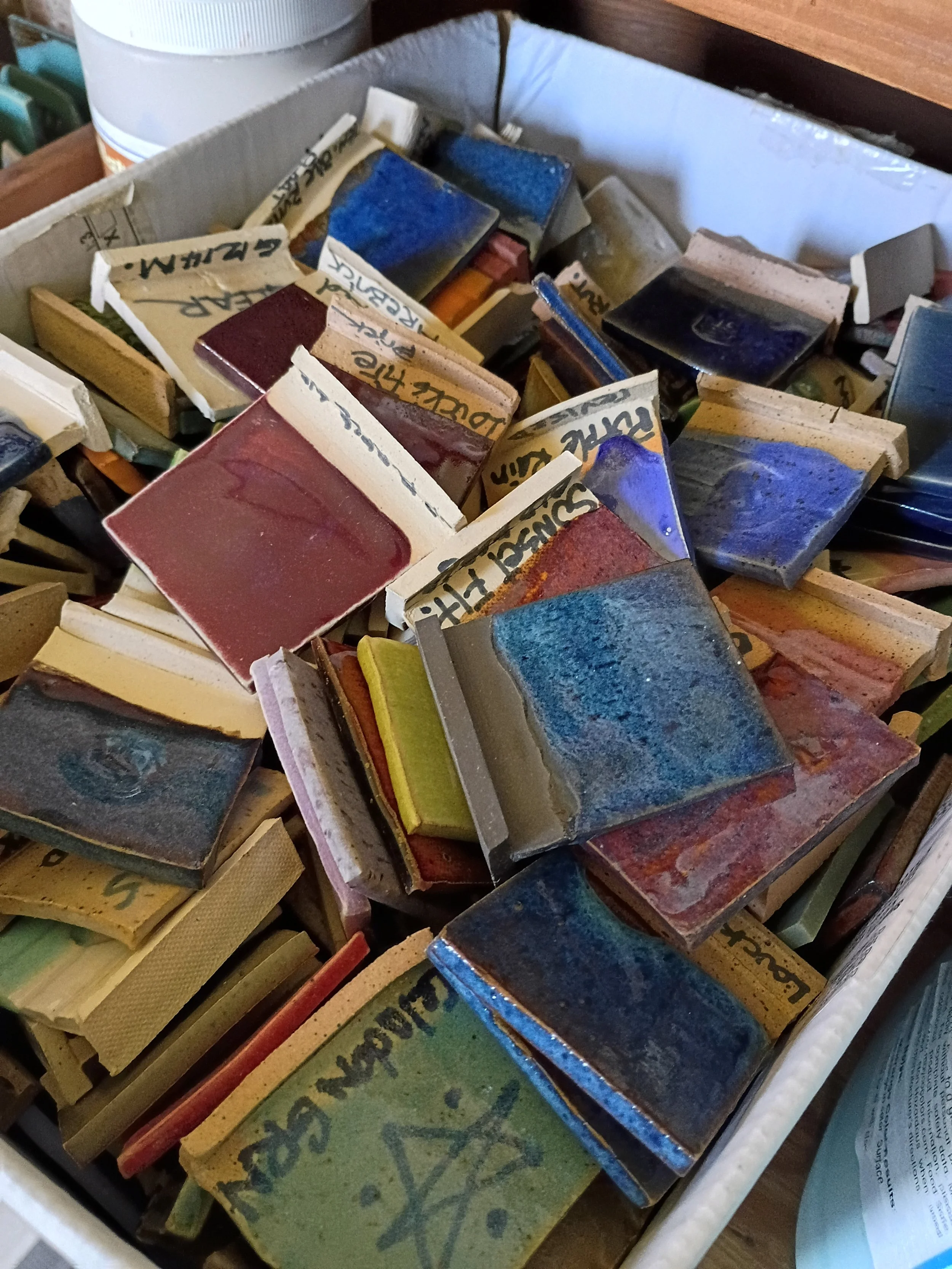
This is the third box of test tiles I’ve amassed. Occasionally, I’ll refer back to one to see how it looked and behaved.
At the same time, I’m shifting toward using stains and manufactured pigments, moving away from many of the heavy metals and metallic oxides that traditionally produce glaze color. Maybe this change was sparked, in part, by my recent surgery—a heightened awareness of my body and a desire to protect it, paired with a need to simplify my workflow and conserve energy. Recipes with more than five ingredients are out. (Though I’ll admit, I’m still holding onto copper oxide—for now.)
My palette is narrowing toward tertiary colors: green, orange, and purple. These feel the most at home on the clay bodies I use. Within that range, I rely on both translucent and opaque variations. I’ll likely keep a floating blue—it has its admirers—as well as an opaque white and a yellow for layering. Beyond that, most colors tend to go unused, quietly forgotten on the glaze shelf and will be tossed out if I can’t revise them to hew to my new palette (eg. a blue becoming green or purple, a red moving to orange, etc.)
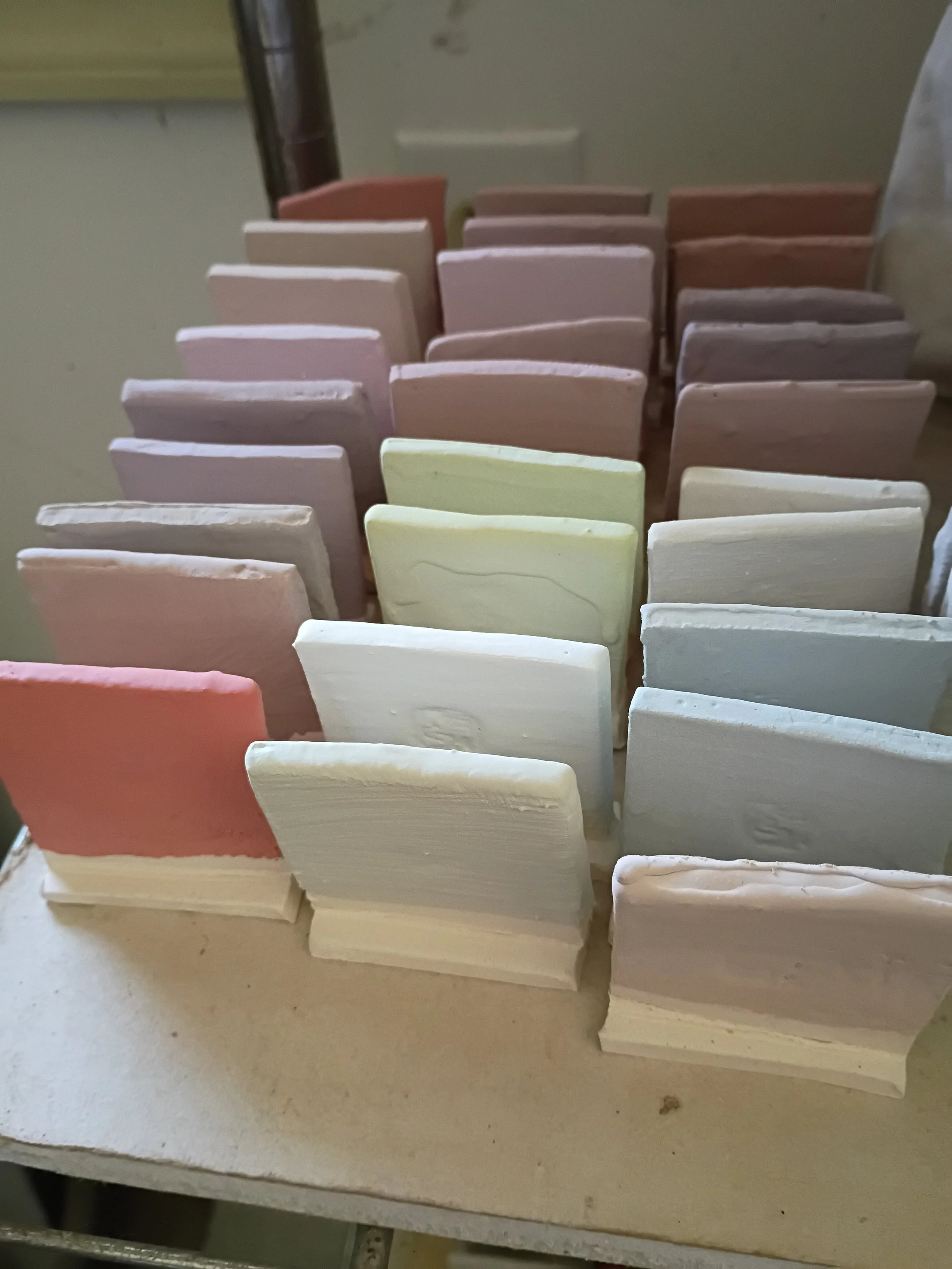
Test tiles ready to be fired. Raw glaze doesn’t look like much because it’s just powdered rock— until the heat of the kiln can work its magic.
For materials, I’ve been sourcing stains from US Pigment Corp. They carry a wide range of ceramic stains and other dry materials, and I’ve consistently had good experiences with their pricing and shipping.
If you’re interested in developing your own glazes, I highly recommend spending time with Tony Hansen’s Digitalfire website. It’s an incredibly deep resource—not just for recipes, but for understanding how glazes actually work: how materials melt, why defects like bubbling or crazing occur, and how to correct them.
And as always, a practical note: wear a respirator when handling dry materials. Here’s why.
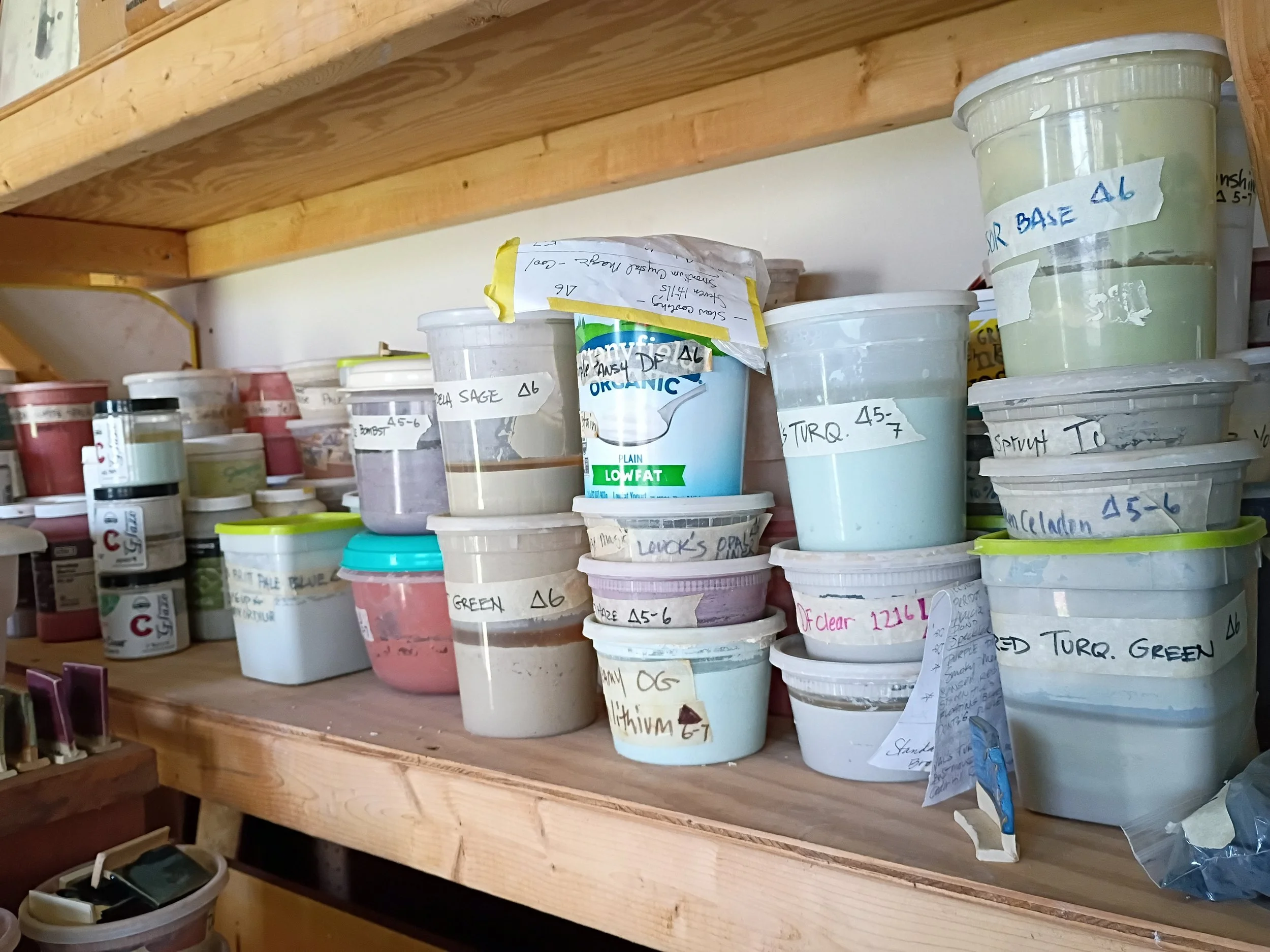
My arsenal, whittled down significantly within my new guidelines.