
I opened the kiln and stood there longer than usual.
There's a particular quality of attention that fired ceramics demand — a kind of slow looking that can't be rushed. You make these things. You mix the materials, apply them with intention, shut the lid and surrender them to 2200 degrees of transformation you can influence but never fully control. What comes out is always a negotiation between one’s vision and the kiln's own opinion.
This batch had opinions.
I was testing new glazes — a project I've been building for months, reformulating my entire palette away from heavy metal oxides toward Mason stains. Safer chemistry. What I didn't anticipate was that the limitations would crack something open. That working within new constraints would produce colors more essentially mine than anything I'd made before.
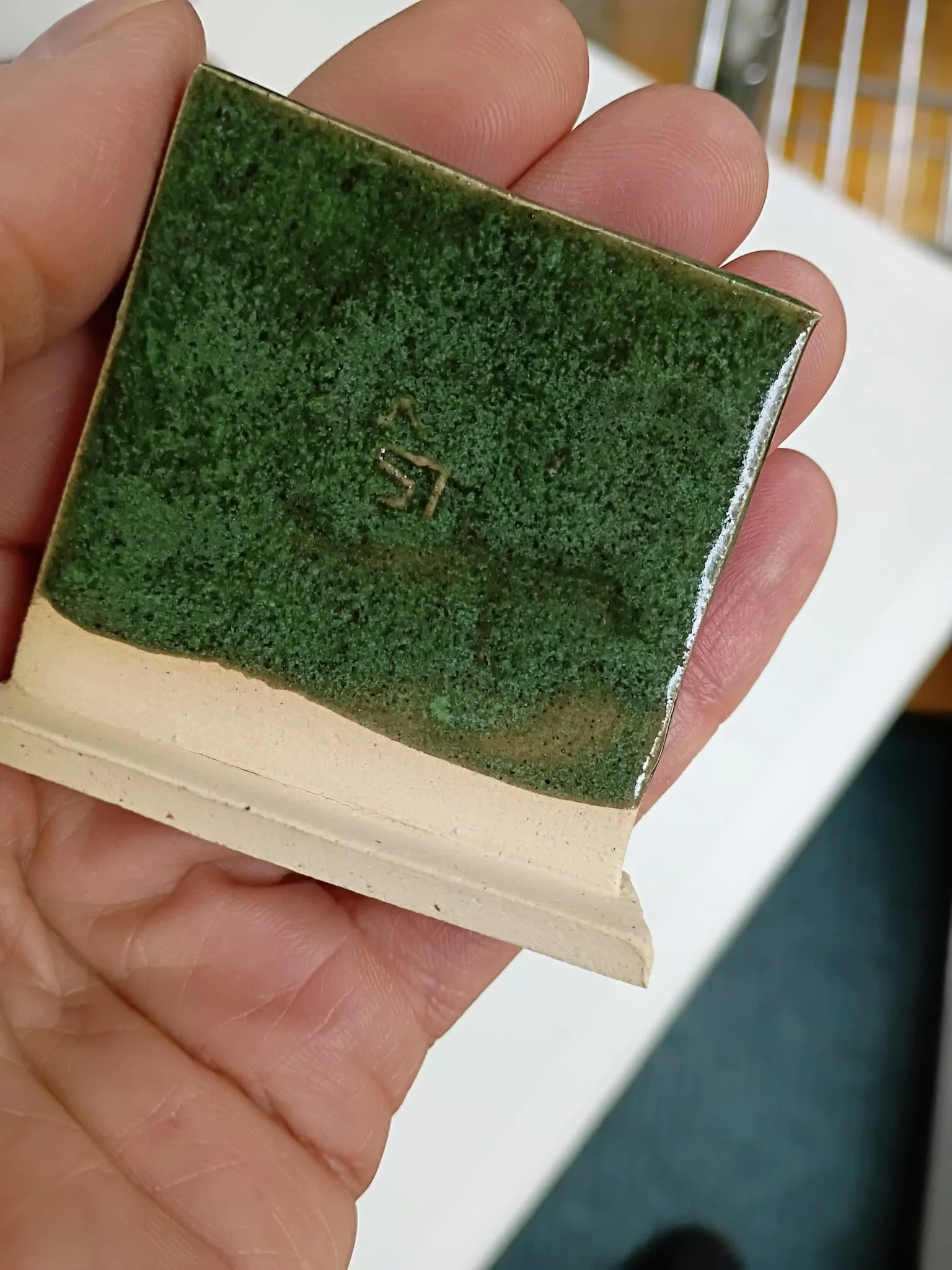
I spotted the green first.
I've made tons of greens. Peridot, celadon, chartreuse, sage, mardela, turquoise in several registers. I know the green family very well. This one was different and it stopped me the way a sound stops you in a forest — that sudden alertness, the sense that something is present that wasn't there a moment ago.
It's the variegated color of frog skin. Of the dappled forest canopy shade in high summer. Of the microscopic bloom on the surface of a still lake — that thin, ancient skin of algae and organisms so small they have no name in common language. Threaded through it, barely visible, the finest titanium particles catching light like motion frozen mid-gesture.
It feels alive because it is alive. Or rather — it contains the signature of living systems. It carries the frequency of things that grow and transform and return.
This green is Verdure. Not just a color name but a title. The ancient Europeans gave a name to the Living Green, the renewing force, the verdant one. The one that can’t be killed— it is death and rebirth. This glaze carries that lineage. A Greenman tile fired in Verdure wouldn’t merely be decorated in such a color; he’d have arrived in his proper substance.
The second tile stopped me differently.
Where Verdure is jurassic and patient and vegetative, this one is metabolic. It's the colors of living systems caught in the act of being alive — the iridescent flash on the scales of a rainbow trout, the momentary firing of chromatophores, the deep warm orange of wet red earth at the edge of a lake with all its oily biological complexity intermingling at the waterline. It has depth without heaviness. Warmth without aggression. That gauzy, barely-there pink dancing on its surface like a blush under translucent skin.
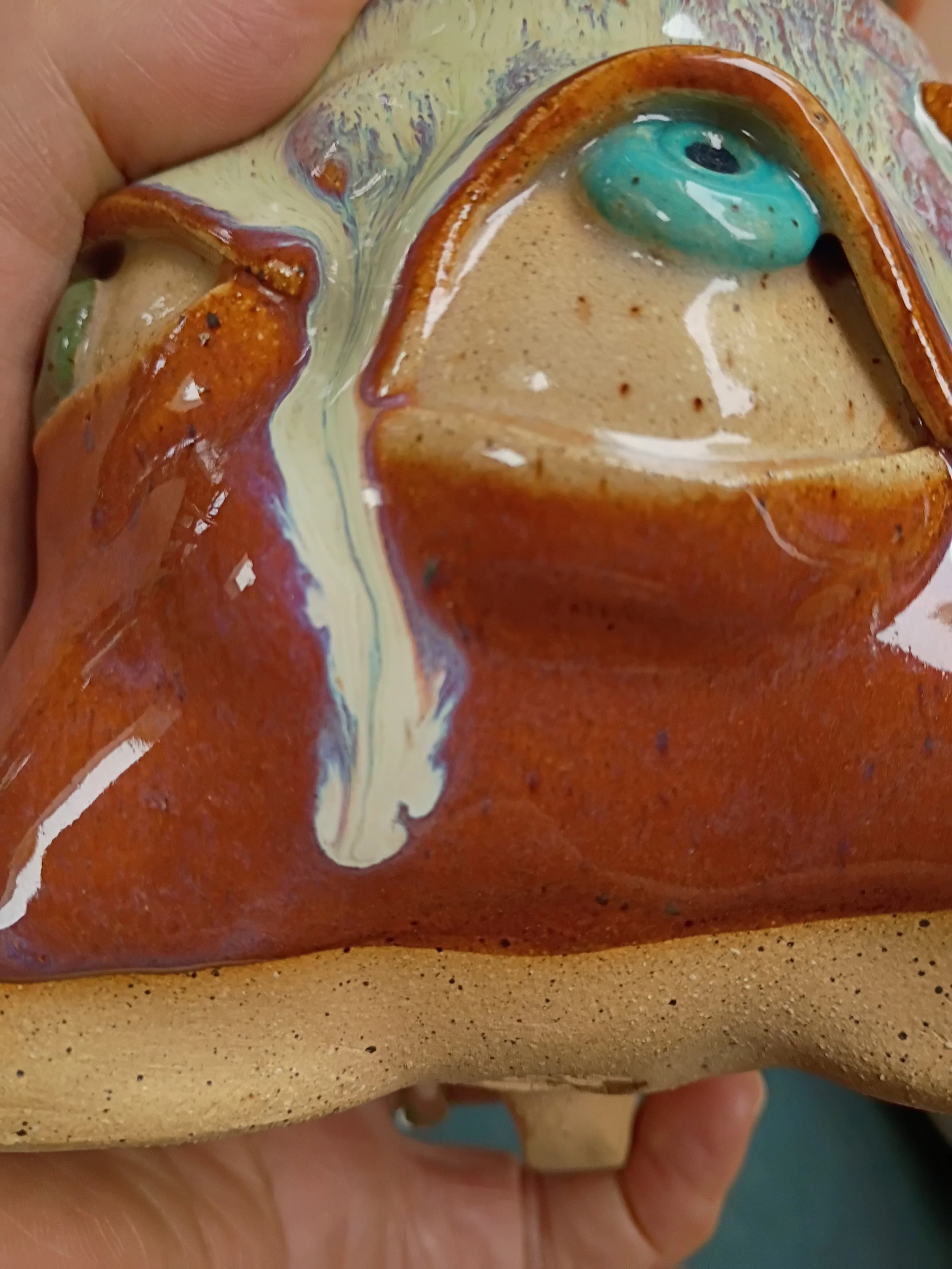
Riparian, another color from this batch of test tiles, is just so reminiscent of the earthy shore of a lake. That palest pink haze on the surface is an elemental boron float. The paler greenish rivulet is a lithium-based glaze that pools and runs more freely than the glaze underneath.
This one is called Riparian. The stream's edge. The threshold habitat where land and water negotiate a boundary, where biodiversity concentrates, where the most interesting life gathers because it can draw from two worlds simultaneously.
I make threshold objects. It makes sense that I would find this color.
Here is what I've been thinking about, standing in the studio with these tiles in my hands:
Every ancient civilization that has ever existed has had a sacred green. Malachite. Verdigris. Celadon. Jade. Across cultures that never spoke to each other, green meant roughly the same thing — life force, the numinous, the threshold between living and whatever comes next. These colors are never invented. They’re recognized. Someone looked at a mineral, a patina, a stone and said: ah ha!—there it is. That's the one.
I didn't create Verdure and Riparian. I only summoned them from what was latent in the materials, in the chemistry, in the long collaboration between my hands and the kiln over several years of patient work. They were waiting in the same way the Greenman was waiting in the European imagination for someone to carve his face in stone. He wasn’t invented but discovered.
I think this is what I mean when I say my work has a mythology. The objects themselves contain a cosmology I'm still in the process of understanding. The glazes have names because they arrived as a kind of archetype— each one with its own frequency, its own biome, its own place in a system that's larger than any single piece.
Verdure belongs to the forest. Riparian belongs to the water's edge. My glaze palette is becoming an ecology.
I don't know yet what that means for the work. But I know those tiles were waiting in that kiln for me to find them, and I recognized them the moment I did.
If you've ever stood somewhere ordinary and found something magical, you already know what I'm talking about.
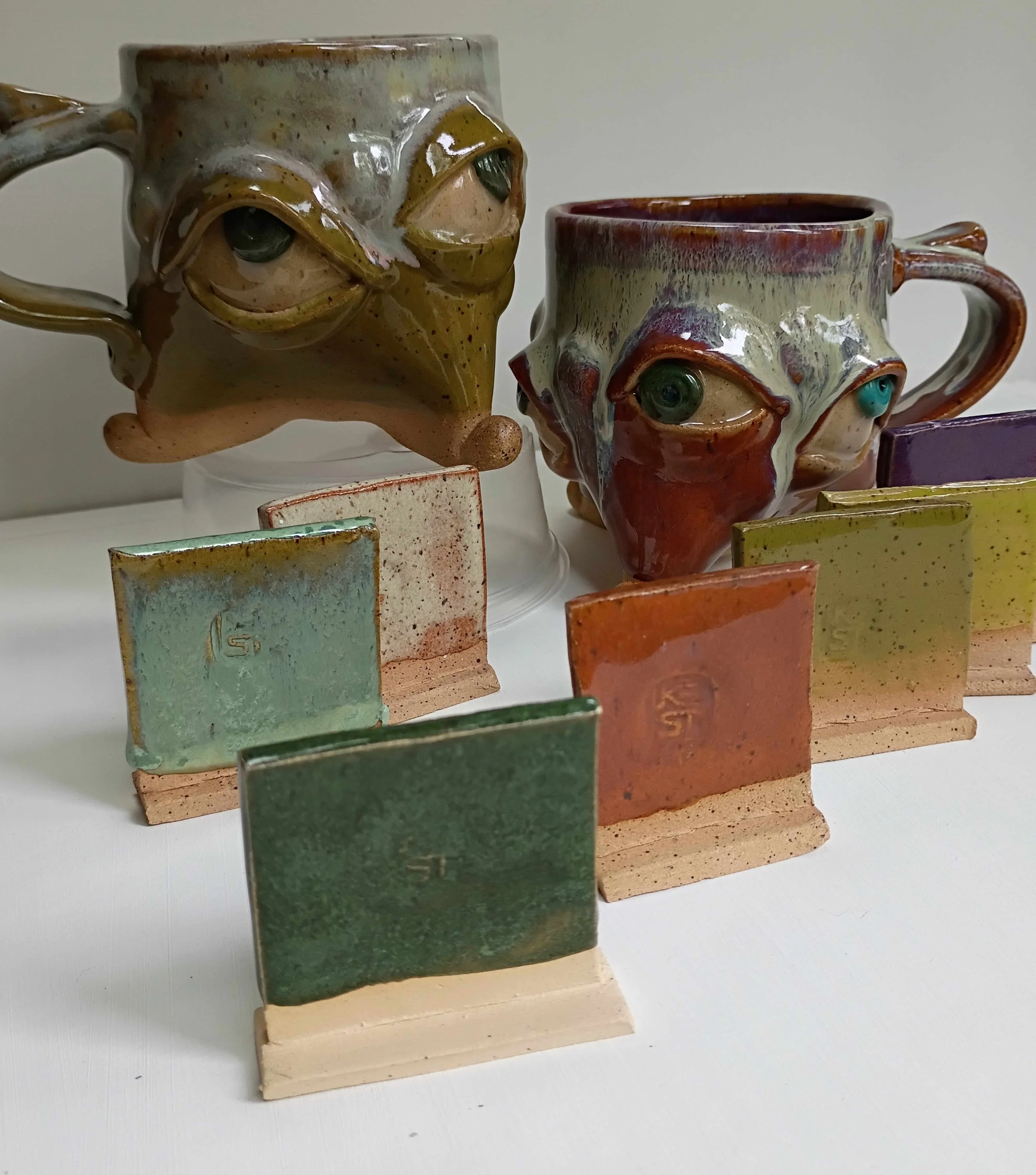
My more limited palette of glazes is becoming more like my painting palette— tertiary colors that work closely together to produce tones you’d find in Nature.