
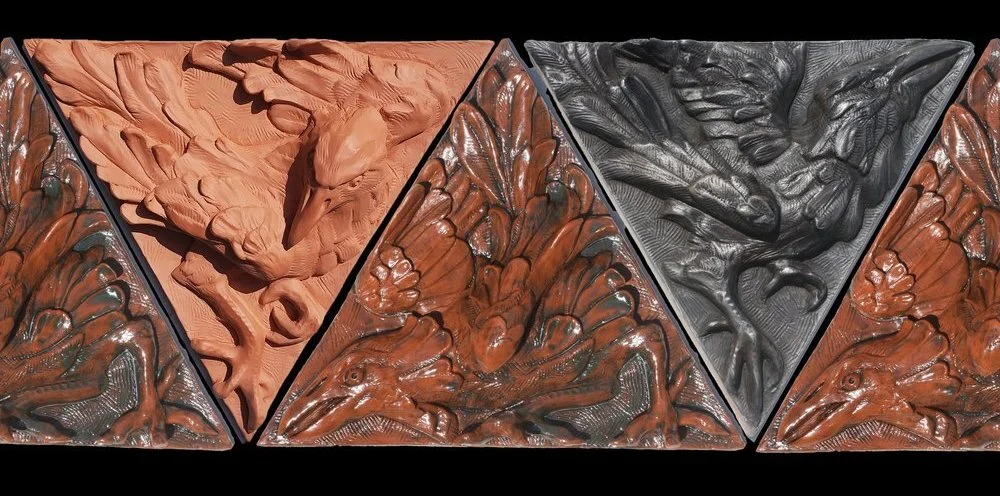
Not gonna lie to you, I too, have been confused about all the sculpture and pottery that I’ve churned out over the past 30 years and what it means to my trajectory as an artist. As I’ve also been a serious stained glass artisan, gardener and landscaper, seamstress and upholsterer, wood craftsman, a student and professor, and more recently, a musician, it’s sometimes a wonder to me how I’ve been able to maintain an illustration career when these other things insist on commandeering my attention.
And I must admit that some of these endeavors have been obsessively serious enough to make me turn my head and question my career choices. Sculpting in clay always held such a fascination for me and I always had my hands in it, but not until I was gifted a pottery studio in 2015 and could pursue ceramics as the real deal, that sculpting became less of a hobby and more of a deliberate component of my art practice.
In 2019, I was given a small order for a 60 tile commission and learned a great deal about what it’s like to do ceramics as a career. Good news is, I’m not giving up my day job yet. I’m still dazzled by all of the endless possibilities a blank two-dimensional surface holds and my mind prods me insistently with painting ideas. The pictorial space of the ceramic tile and the endless possibilities for storytelling in its infinitely malleable form scratches that “illustration itch” quite a bit.
When I started my illustration career in 19-freakin-92, I was young and naively hopeful about rocketing to stardom in the science book publishing market, making money, and generally having a successful career. I’m lucky to have gotten into the field when I did and I can’t complain; it’s been an amazing ride and much of it has gone very well for me. And I never terribly minded things like fluctuating income and long, long hours of work, but there came a time when I looked around me and wondered, “Is this all there is to this?”
Perhaps one gets to a place where doing the same thing every year gets a bit… monotonous. What do you do after you’ve painted over 1000 Monarch butterflies?
The question here is one of sustainability. How do you maintain your interest and curiosity for and around your work year after year, and keep it going for the long haul, hopefully for decades?
The side obsessions and detours are what have have allowed me to continue to grow as an illustrator. There were many times I thought my other interests were trying to steer me away from illustration, but they really only ended up proving to me that what I was doing is what I do best. Ceramics, stained glass, woodworking, and all the many side obsessions have served to make me a better human so that my communication abilities are sharpened and my experience deepened. These detours test my abilities to see through the many lenses of Art. These challenges have brought me more clarity and most importantly, have given me meaning for my life.
So, if you work small, go design an image on a 6’ canvas. If you are a landscape painter, sign up to draw the figure every week for 6 years. Become an avid cyclist. Plunge headlong into a 100-page graphic novel and learn Photoshop on the fly. Read a whole bunch about landscaping and create a new flower garden. Get work in another illustration genre just because it seems interesting. Buy a piano and teach yourself to play so you can join a band and write a few albums in a few years. Be fearless. Be less interested in your shortcomings and more interested in your explorations. Picasso changed whatever he was doing every 5 years or so because he cared more about his artistic integrity and curiosity than the profits. A change up will do you good.
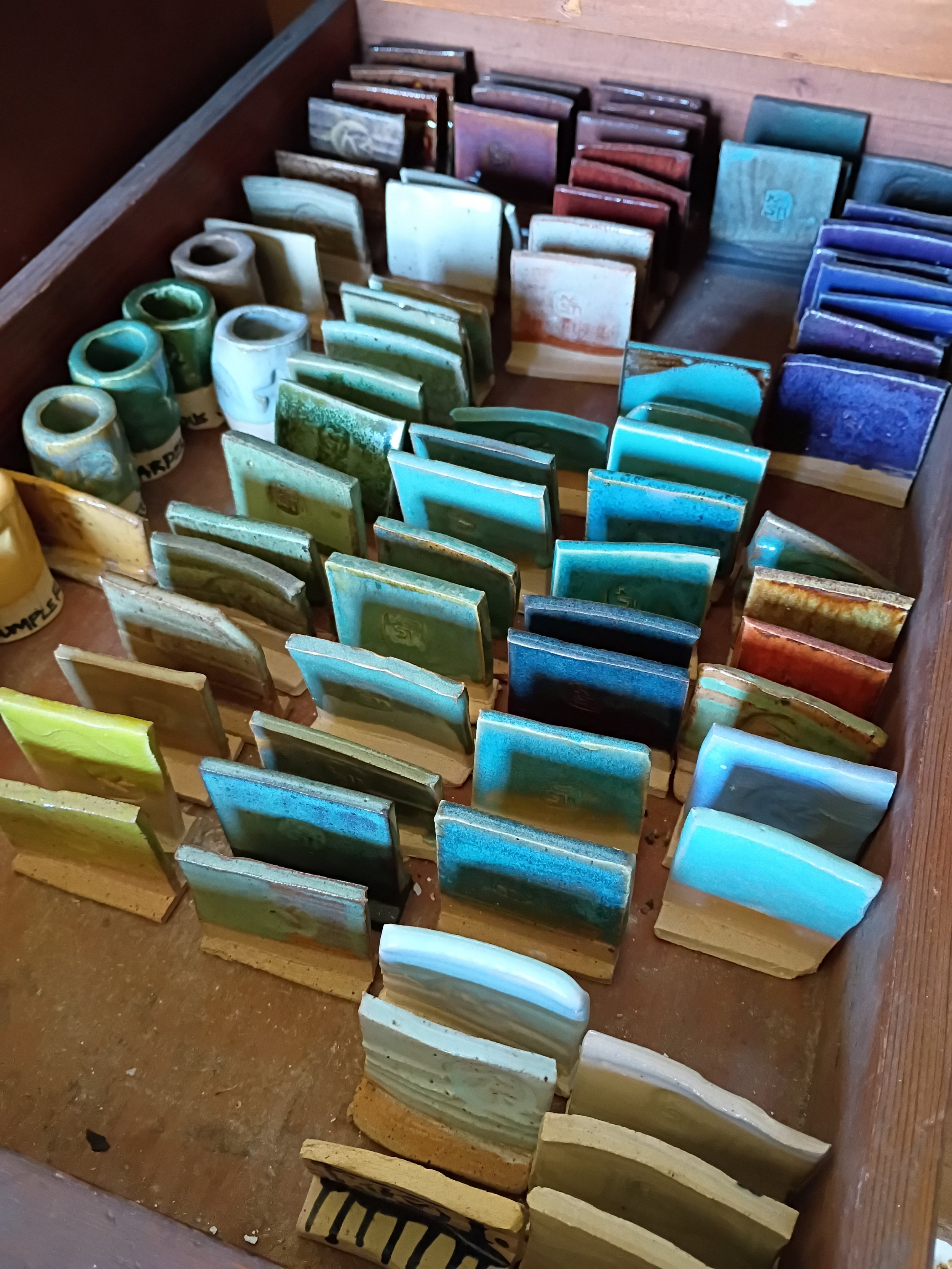
In 2022, I wrote about beginning to make my own pottery glazes from raw materials. Commercial bottled glazes were convenient, but expensive, and I had an itch to develop something more personal. Over five years of experimentation, I’ve come to understand the qualities I’m after…

I’ve been having a lot of fun with the sigil series lately. I especially enjoy making them in rhythm with the seasons—letting each one echo the mood of the turning year.
Lughnasadh is a time of harvest, of gathering what’s grown, and of giving thanks for all that has carried us this far.
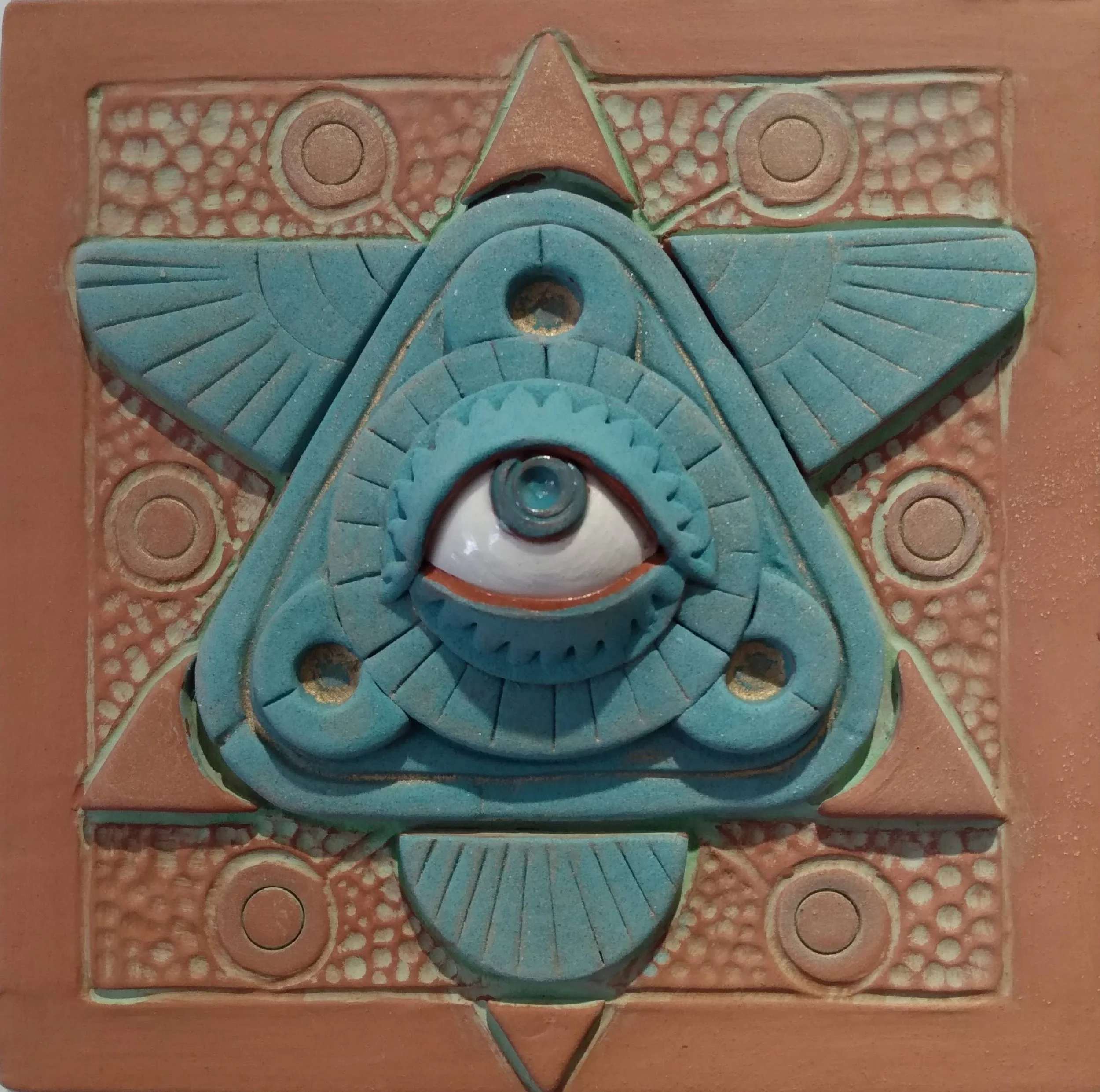
Why do I sculpt so many eyes into my work? It’s a question I get asked a lot—sometimes nervously. The answer has more to do with protection, presence, and ancient symbolism than you might expect...

When I made this piece, I started thinking differently about legacy. It’s not just about me lasting. It’s about us. I want humanity to survive this perilous moment we’re living through. I want us to make it to the other side of whatever this is….

The Sigils are evolving a bit into something intriguing and new. I’m planning on offering a set to mark the eight seasons of the year’s Wheel. Litha, or Midsummer, is coming up on June 21st, representing the vibrant season of light, zenith, celebration, and radiance.
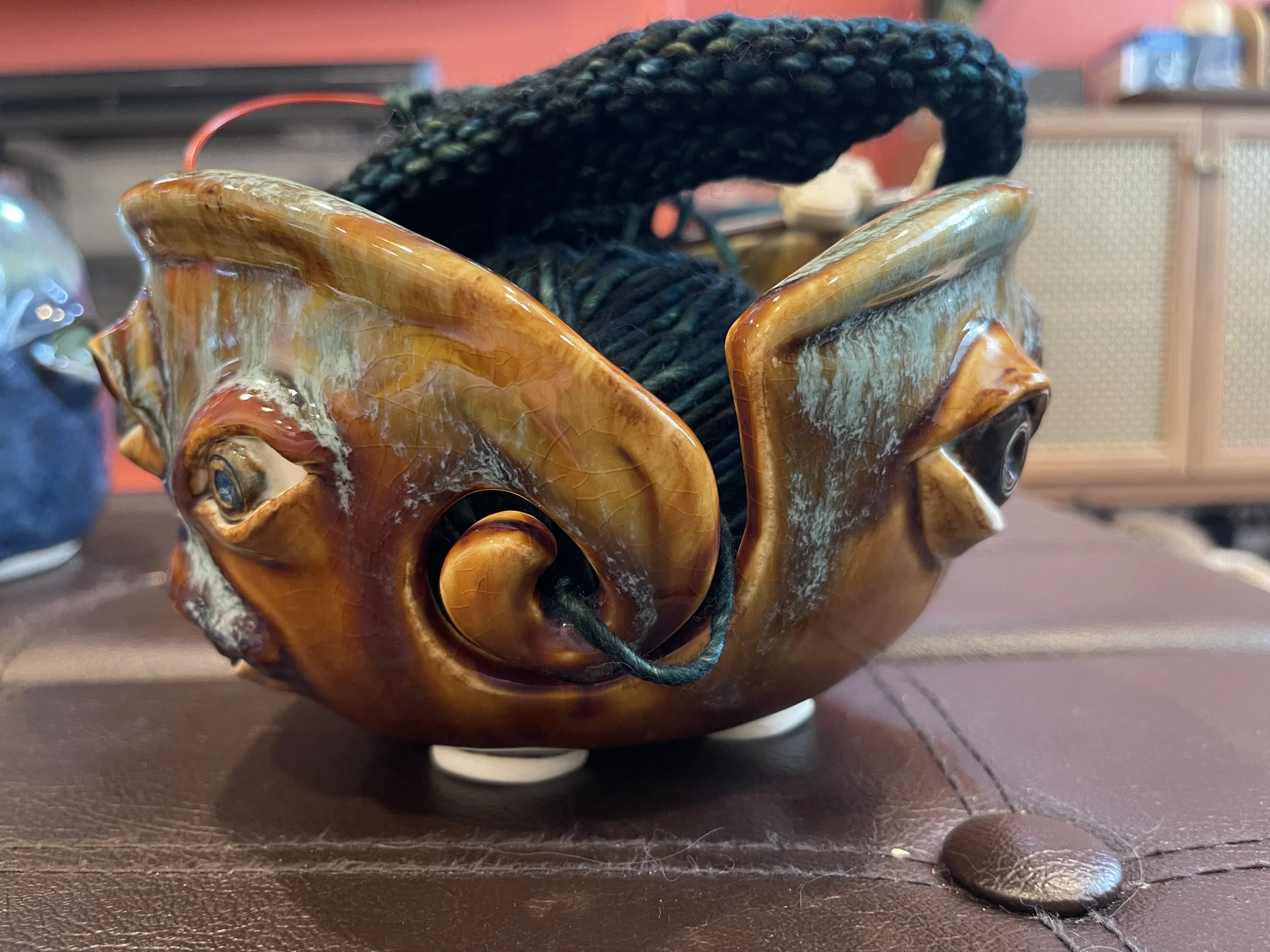
I’d never made a yarn bowl before so when a fan of my work asked me to make her some, I was intrigued with the challenge.

Asimov’s I, Robot stories; the idea of positronic brains, the laws of robotics, etc., fascinated me. I loved the mix of complex ancient civilizations, philosophy, and science fiction. His writing made the potential exploration of worlds by future beings seem so vast and interesting.

What has become pretty clear to me is this: Artists who use their work or others’ work to train an AI to spit out images for them to paint are completely missing the real value of what they potentially could get from working with an AI assistant.

The gallery, Manor Mill in Monkton, MD, has invited me to participate in their group invitational show, “Out of the Forest” this August.

Lately, I’ve been adding videos of my sculpting process on my YouTube channel. I uploaded this one in February after firing a huge batch of mugs.

I’ll be attempting to provide you with shorter blog posts more frequently— once or twice a week — to fill you in on what’s happening in my studio.

Heartbreak is only temporary pain as I scoop the shattered bits of tiles into the dustpan or repair kiln shelves from the bubbled bits of glass fused to their surfaces. My heart begins to mend from the many failures with every dried bit of greenware I dump back into the clay reclamation bucket. Because with every failure, I earn an experience which teaches me something new about my craft.
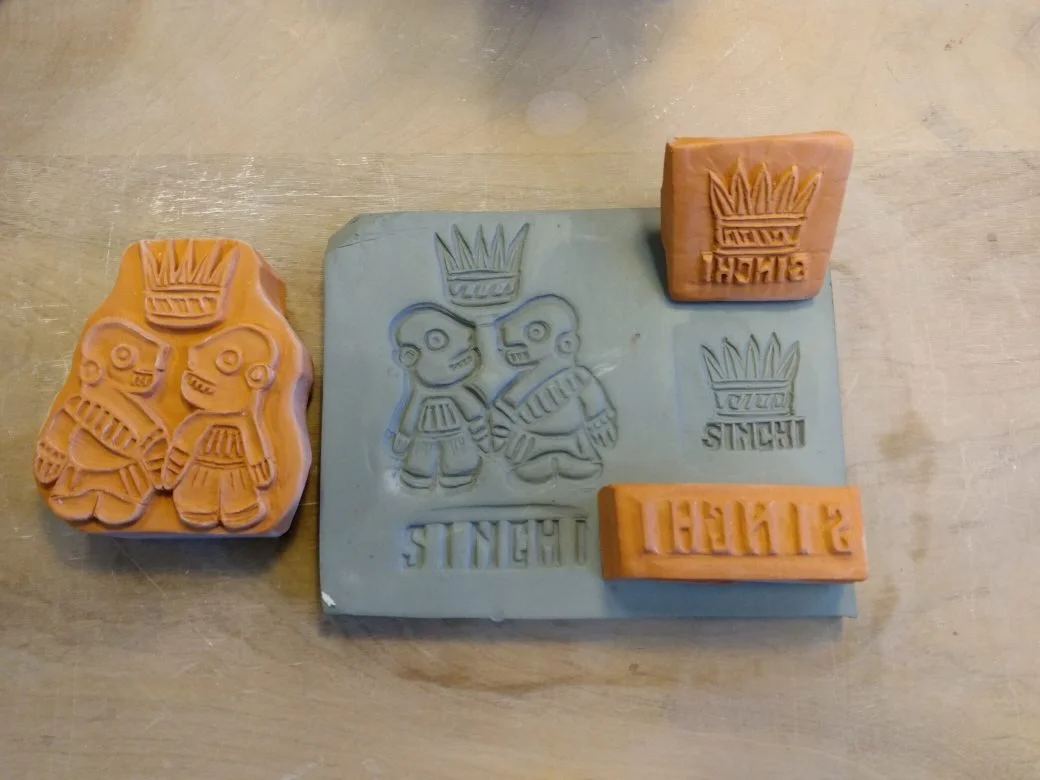
One of the challenges I faced while making ceramics over the past several years is how to re-create something as it was the first time. Someone will say— “Oooh, I love that!” and want the same thing. This is where molds and stamps come in handy….

When I was a kid, I was more than slightly obsessed with little boxes of any sort. Then, I didn’t know for certain why. Perhaps because they held my most important treasures and keepsakes; I stashed….
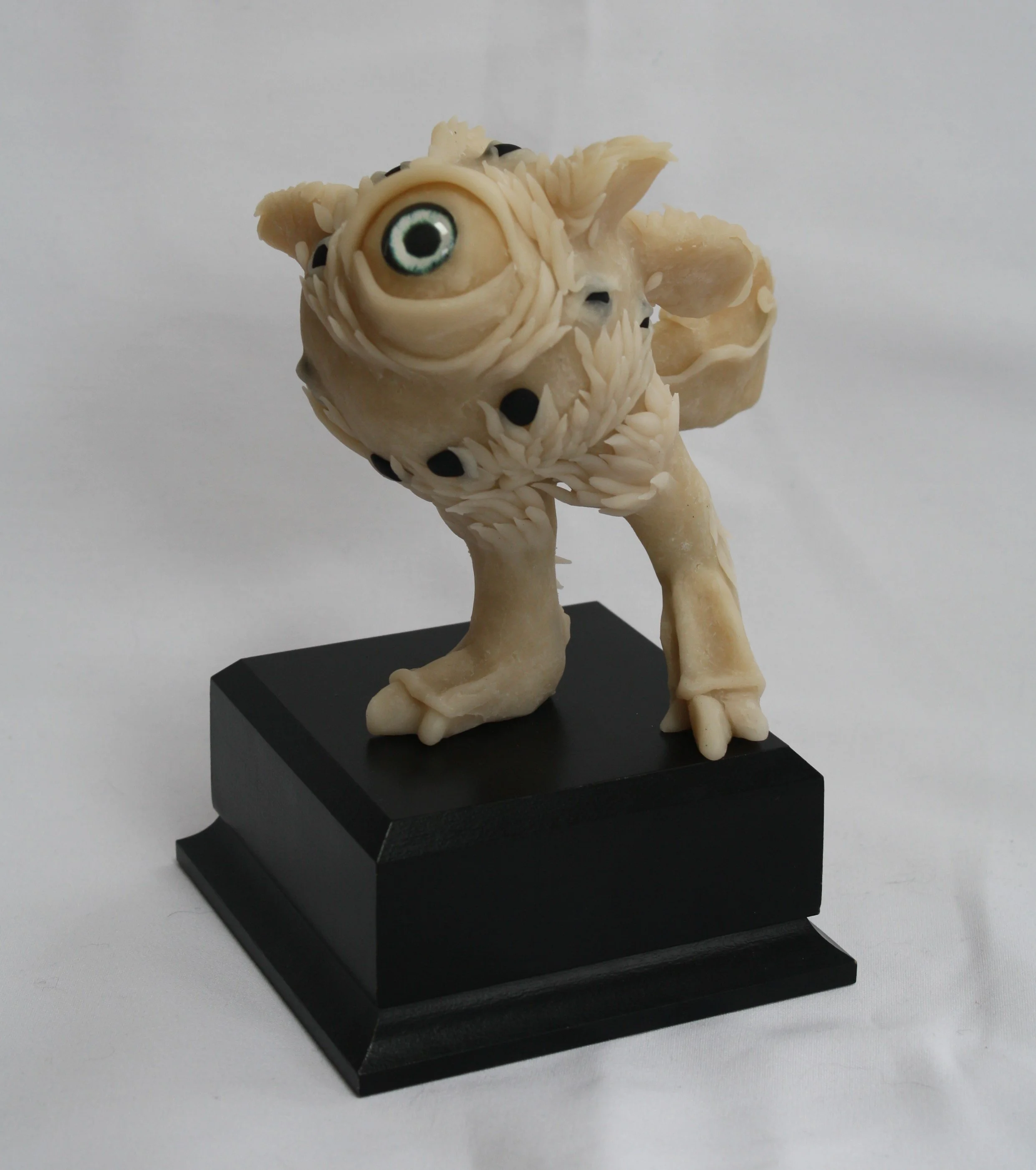
Making the award sculptures for ConGlomeration’s Art Show was a fantastic time. Being given carte blanche meant I could just have a blast imagining anything at all…
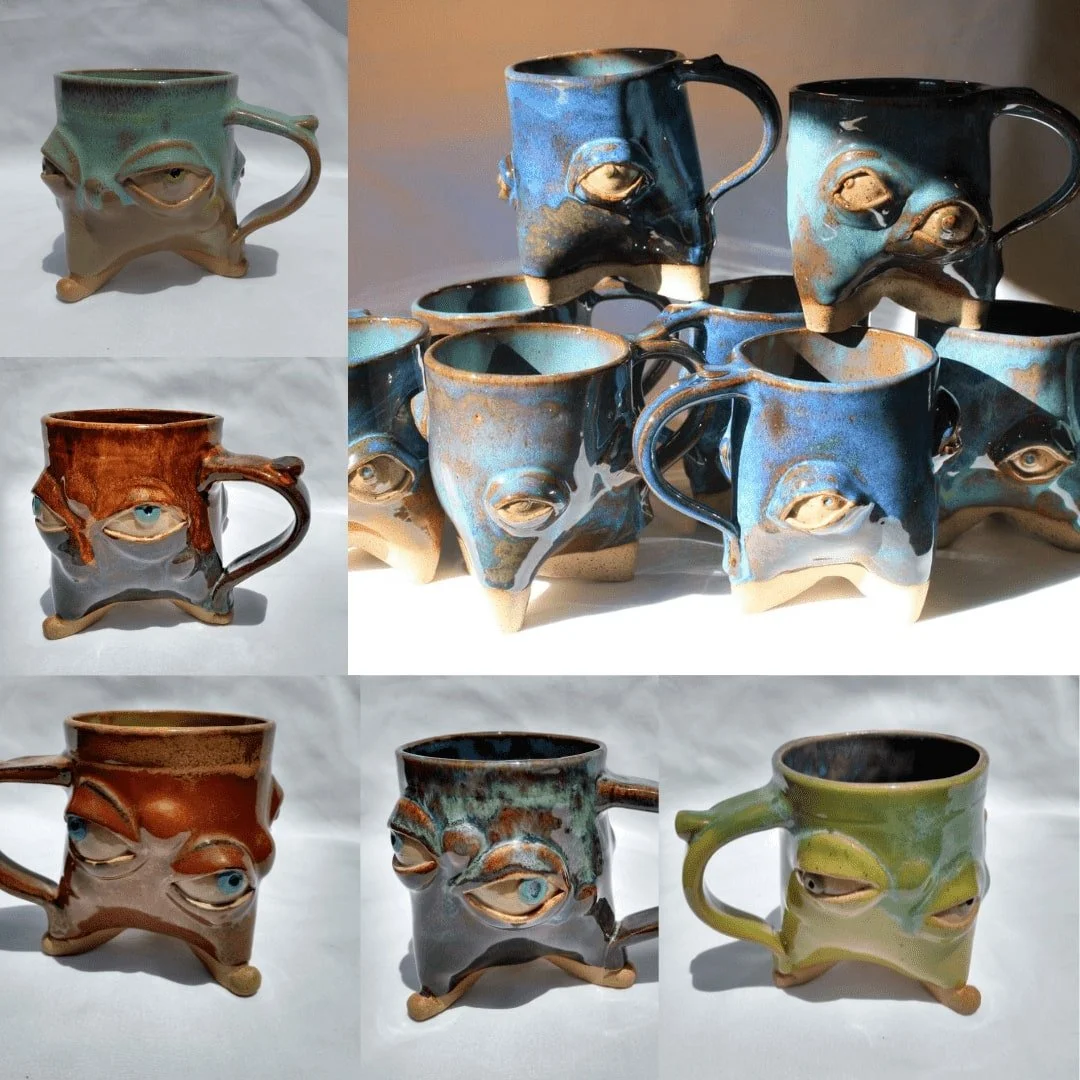
When I had made a batch of these prototypes, I gave one to Elva, my pottery mentor who gifted me my studio and equipment. Her remarks on seeing the ware were that I was making pottery in the tradition of “face jugs.” What was that?

Sometime in the mid-90s, I had the opportunity to visit Harlan Ellison and his wife Susan at their home in Thousand Oaks, CA, and what I remember most was the gargoyles they had hanging over the garage entrance. When I got home, I just had to try making some of my own….

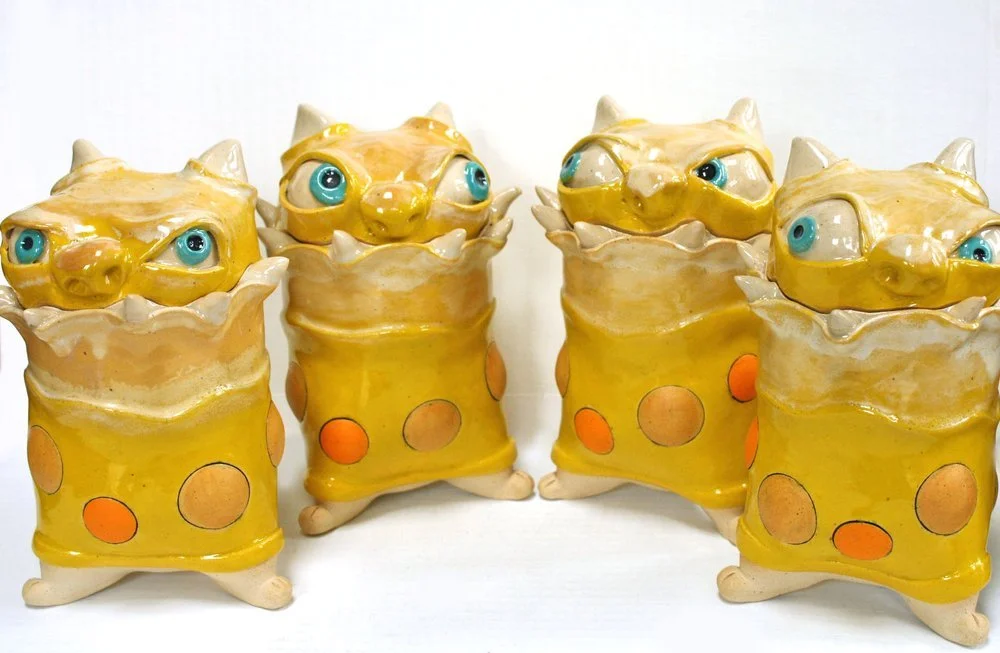
“Moonpots” are my variation on the 1000-year-old Yixing tradition of making lidded teapots. The Jiangsu region boasts a unique purple sand clay which the artisans use to produce beautifully hued ware, but it’s the method and precision of the construction of the pots which first grabbed my attention when I became aware of this tradition.
For the past couple of decades, a late December tradition has been to look back on the past 12 months and give its passing some kind of assessment. I remember all the wonderful people in my year and the “successes” for which I’m grateful, and then there are the things that didn’t go as planned but I’m still happy if I learn something from the experience. This exercise is also accompanied by a list of

The Monsterpots are what you’d call a staple in my Kest Pottery shop. In marketing parlance, it’s called a “signature item” that I make all the time and it’s a unique thing. One might call it a branded work and in doing so, I betray the fact that I’ve been doing waaaaayyyy too much research about marketing.

Not gonna lie to you, I too, have been a little confused about all the sculpture and pottery that I’ve churned out over the past 30 years and what it means to my trajectory as an artist. As I’ve also been a serious…

Ever wonder how the ceramic process works? I'm fascinated by it and I think you'll be too once you know more. Ceramics, like many other art processes, is a multi-staged process. Here is my quick-and-dirty explanation:
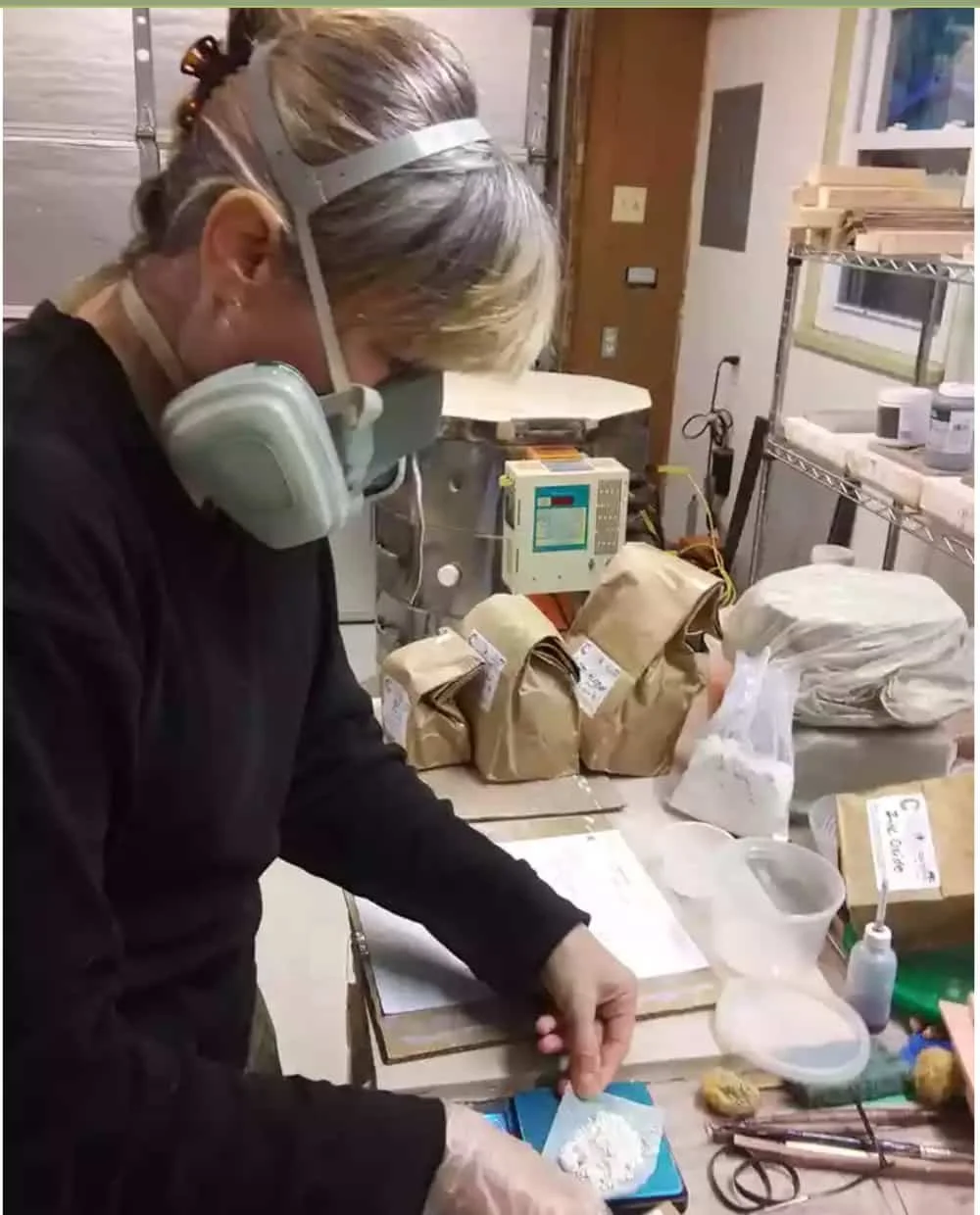
I’d gotten to a point in my ceramic work where I was becoming curious about the chemistry and wanting to have more control over the surface appearance of my work, but even more, I wanted to cut down on the cost of my glazes. Commercial glazes are hella expensive but worth it for the reliability, and making glazes from scratch was a nightmare— so I was told….

Several years ago, I put aside all friendly warnings and dismissed my trepidation and started mixing my own glazes…

When I began using my kiln in 2016, I began keeping a log of the hours that each firing took to achieve a certain cone or temperature. For a few years, the number of hours really didn’t change too much unless the kiln was really loaded but then I noticed…
I was testing new glazes — a project I've been building for months, reformulating my entire palette away from heavy metal oxides toward Mason stains. Safer chemistry. What I didn't anticipate was…