
The fourth and final panel of the *Seasons* series commission for clients. This is still a work-in-progress, and this blog entry reveals the initial stages of the painting. I’ll add more photos and commentary as it’s completed.
Read More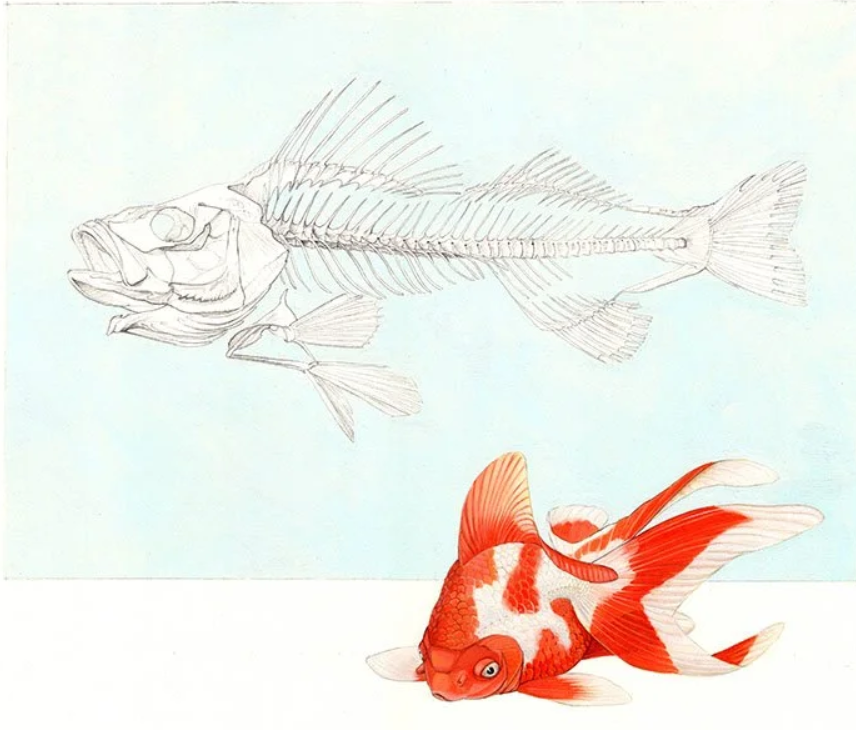
Page illustration of bony fish from The Animal Skeletons book, Presnall, Franklin Watts, 1995.
Is Art School Worth It? Wrong Question
"Is art school worth it?" is the wrong question — it assumes worth can be measured before you know what you're shopping for. Drawing on three very different schools and what each one actually delivered, here's a better way to figure out what you need before you enroll in anything.
Read More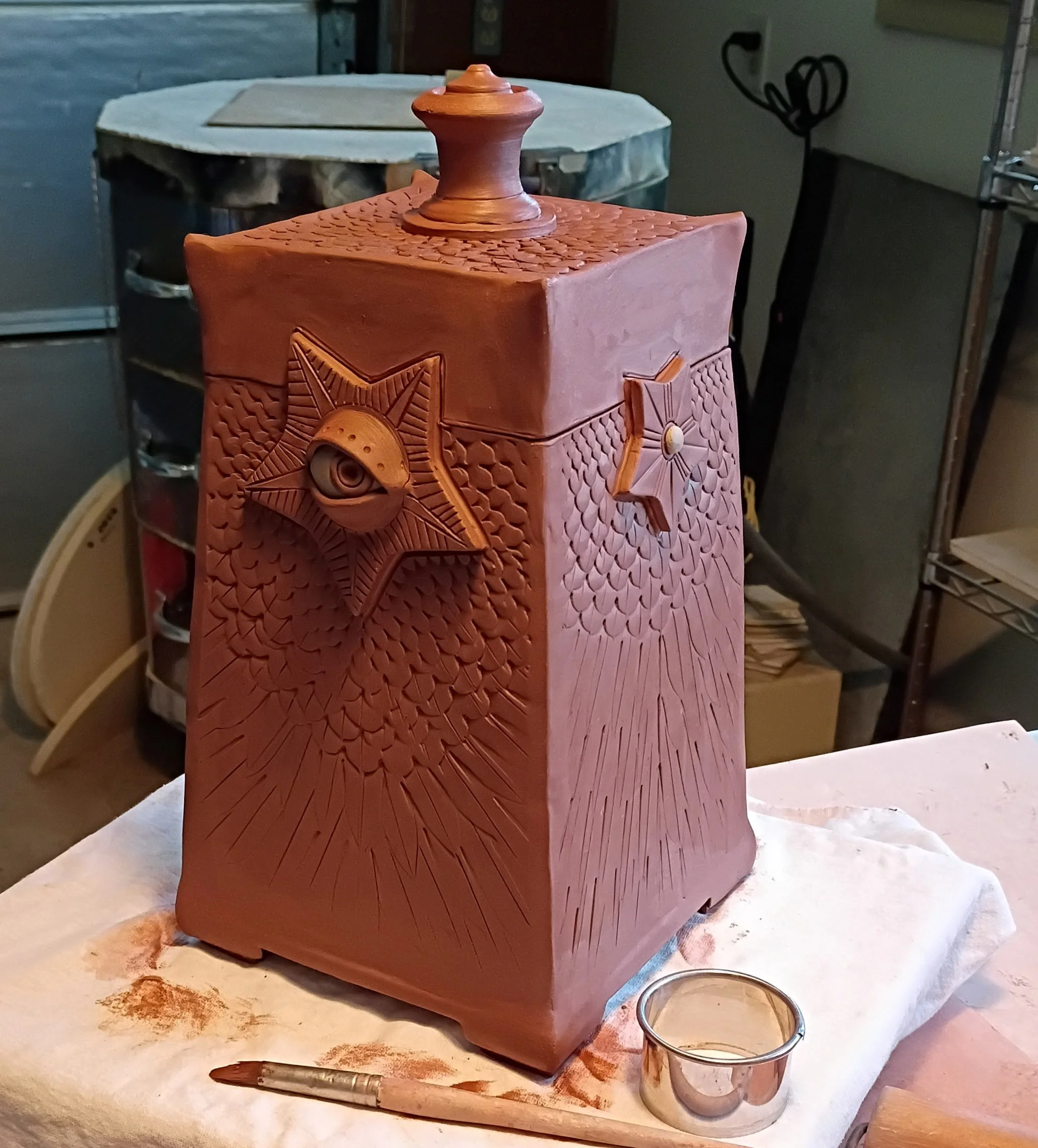
Recent ware on my pottery bench… Handbuilt Dark Brown stoneware (Standard 266), approx. 14” high, unfired. Part of the 4 Directions series.
The Signal: How To See Your Own Work
Most artists have been taught that self-critique means finding what's wrong and fixing it. But real self-critique isn't subtractive — it's gravitational. Here's how to find the signal that actually guides your best work.
Read More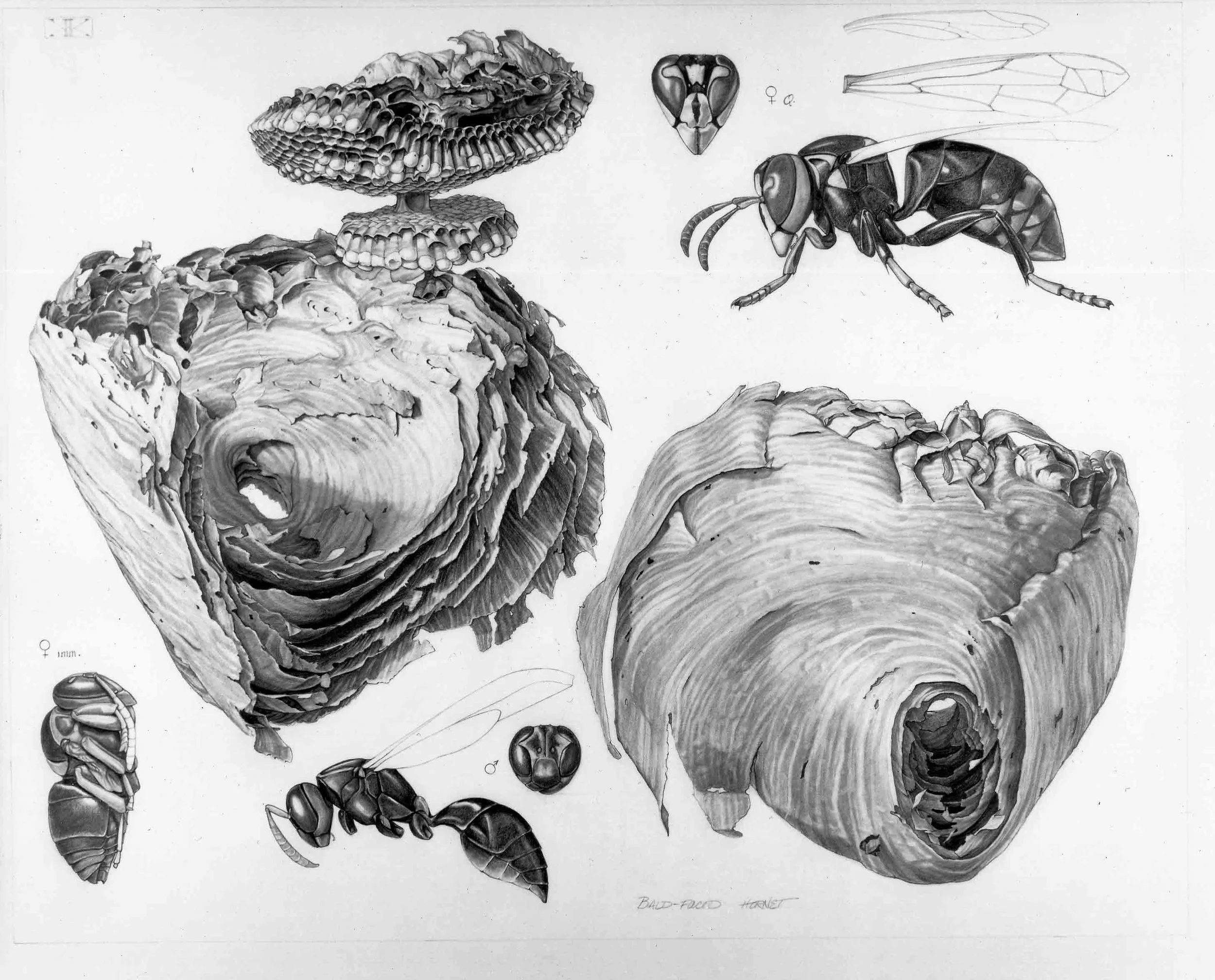
A graphite drawing I’d made for my first portfolio: A cutaway of a Bald-faced Hornet nest. 22” x 30” on Arches paper.
Housecleaning as a Path to Creative Pursuits
Within a month I had more cleaning clients than I had hours for — so I gave the overflow to another person who needed a start, the same way my friend had given her clients to me. The demand didn't dry up. It never does.
Read MoreOn the Mark of Kest
A provenance note on the name, the cartouche, and their evolution
I. The cartouche
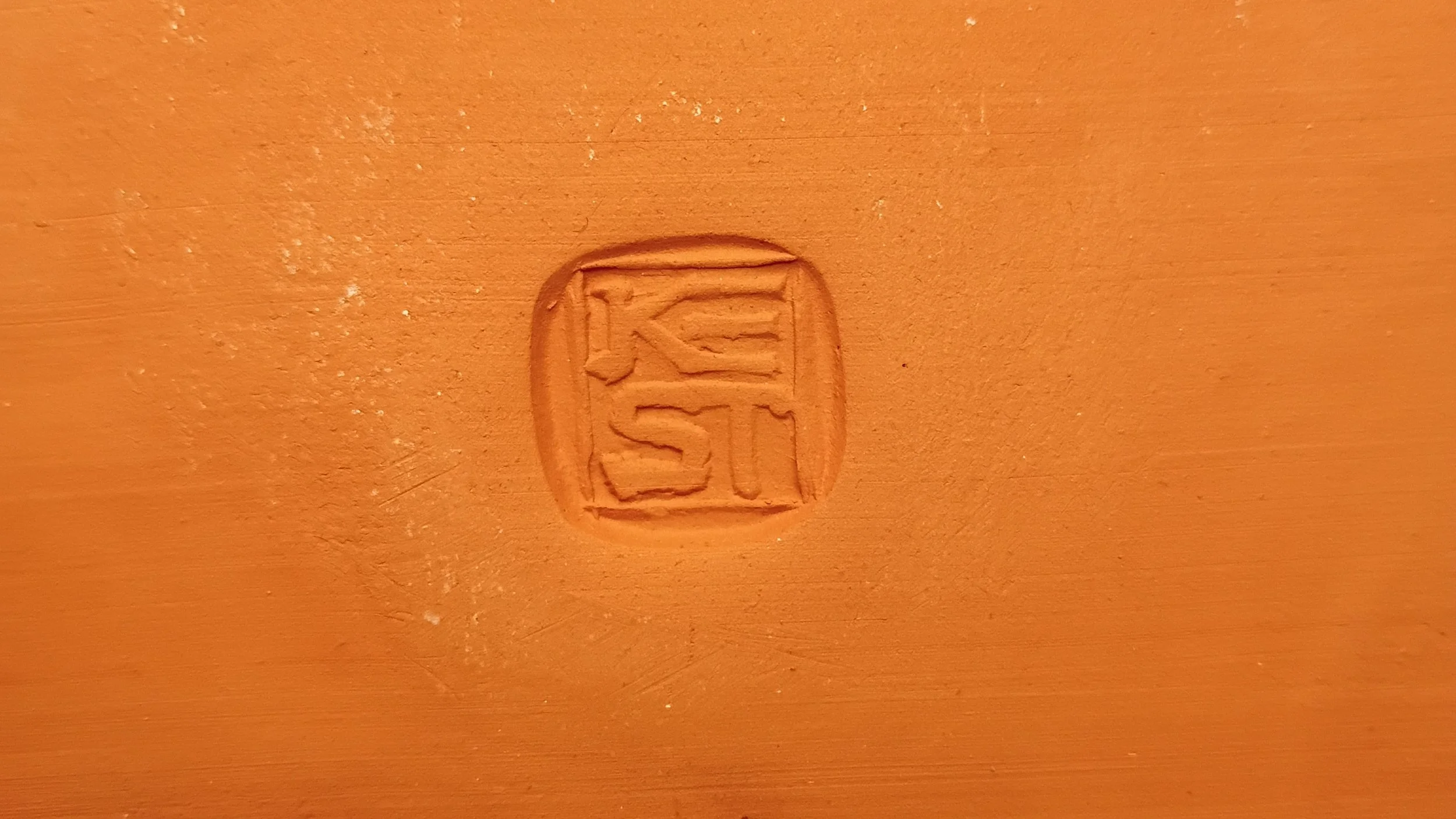
Originally, the pharaoh's name was enclosed in an oval — a cartouche meant to encircle and protect the divine king's identity for eternity. Mine has a simpler meaning. The square cartouche of KEST that appears on my pottery and on my paintings mainly highlights the object's handmade quality. A human made this thing. One person, with a name.
You may be curious when and why that name changed. I was always the person who was going to change her name — I knew it from the time I was in my single digits. My father's family name was old world, difficult to pronounce, more difficult still to spell, and I had tired of explaining it over and over across every phone call and transaction that required it. Kest is easier — to say, to spell — and it has a snappiness that I always enjoyed in short last names.
At age 19, I walked into an attorney's office with a check for $400. Three months later, my name was changed in court. I had the middle name struck as well. Such audacity.
I didn’t tell my father's family beforehand. My mother thought I should. But I was over 18, paying my own way through art school, working a full-time factory job, owning a vehicle, renting an apartment — fully adulting, as one might say now. In 1988, a person could actually afford to do all of that simultaneously, which tells you something about both the economy and my stubbornness.
II. The evolution of the mark
Before any published books, long before any pottery or sculptural work came into being, my original mark was a simple script signature: Kest. When I began working as a freelance illustrator, it was cleaner to develop a proper cartouche — two K's set back-to-back inside a rectangle. All straight lines, easy to render cleanly on book covers and fine art pieces. Thirty children's books and several years into a boutique pottery practice, I was still using that mark.
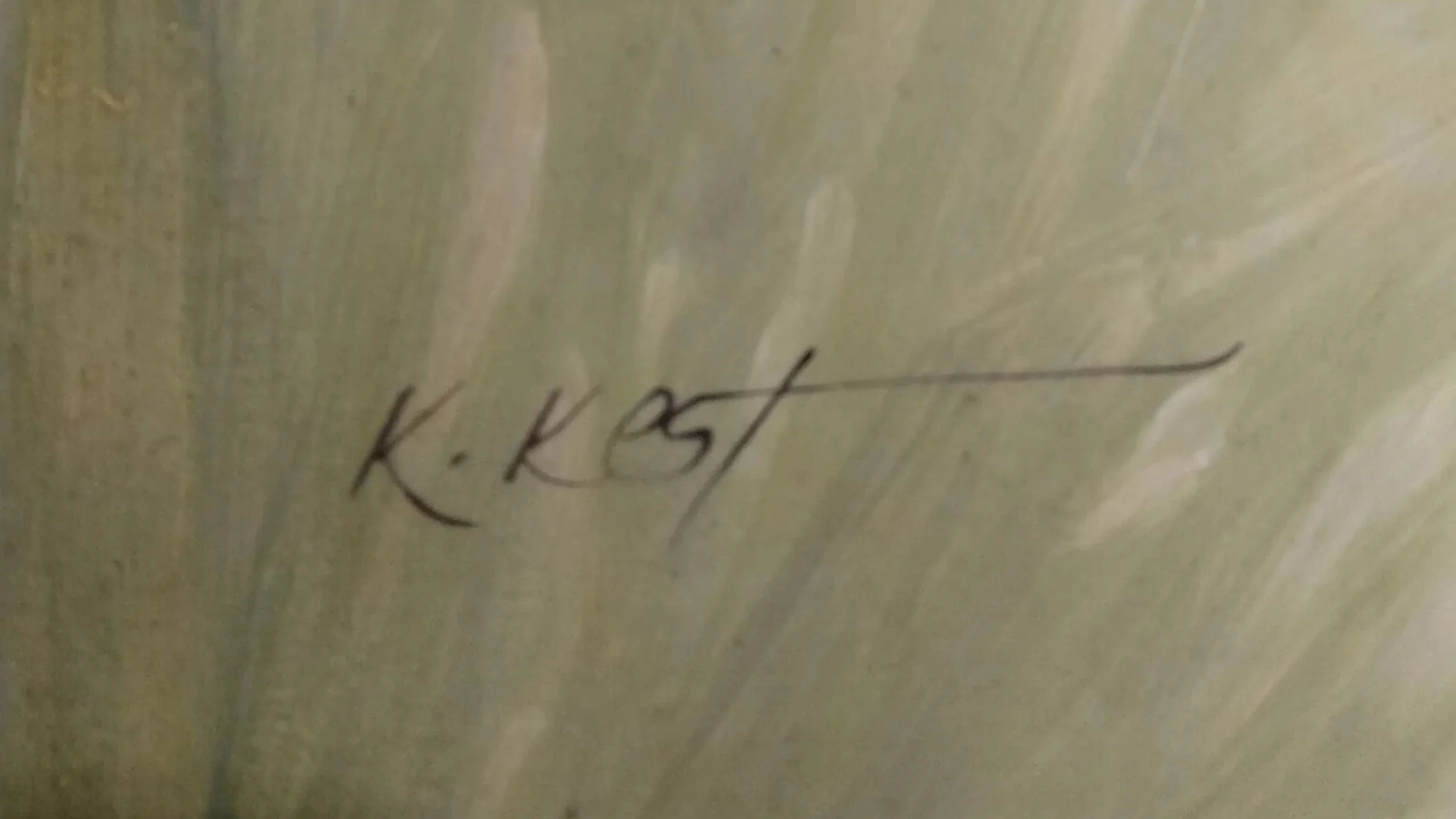
The earliest signature I can find with Kest on it is on this painting, Thumbelina.
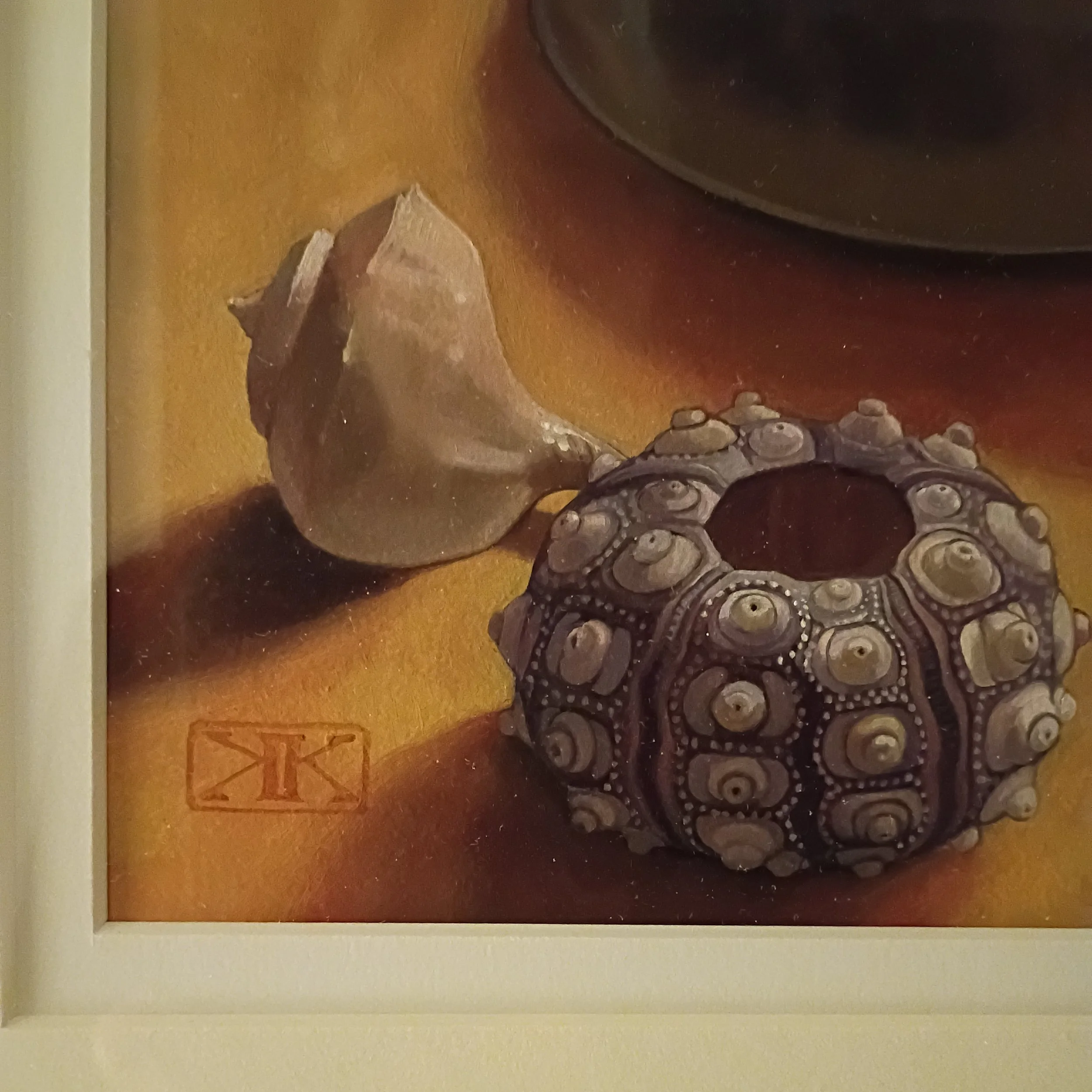
The cartouche on my painting, Marine Biology. This mark held fast for a few decades.
That is, until 2019 when a friend asked whether my pottery had ever been confused with a product of Kim Kardashian's — who, it turns out, uses a back-to-back K trademark on her goods. I had been using my back-to-back K's since well before Miss Kardashian wore a training bra, but I had never trademarked it, imagining that thirty years of published work would protect the sign well enough. The universe, apparently, had other ideas.
I'll admit I was briefly peeved. How dare she. I saw one of her delivery trucks rolling down the road with those back-to-back K's printed in enormous letters on the back, and I was briefly more peeved. Then I thought: cats who find themselves suddenly outdoors don't waste time on self-pity. They go about taking care of themselves — undaunted, undeterred. Obstacles are meant to be surmounted.
I designed a better chop.
The new cartouche: K E S T, two letters above and two below, sometimes inside a square. I use it now on all pottery and sculpture, and as a cartouche on my paintings. It is cleaner, more complete because it has the advantage of telling anyone who encounters it my entire name — no confusion with anyone else, no explanation required.
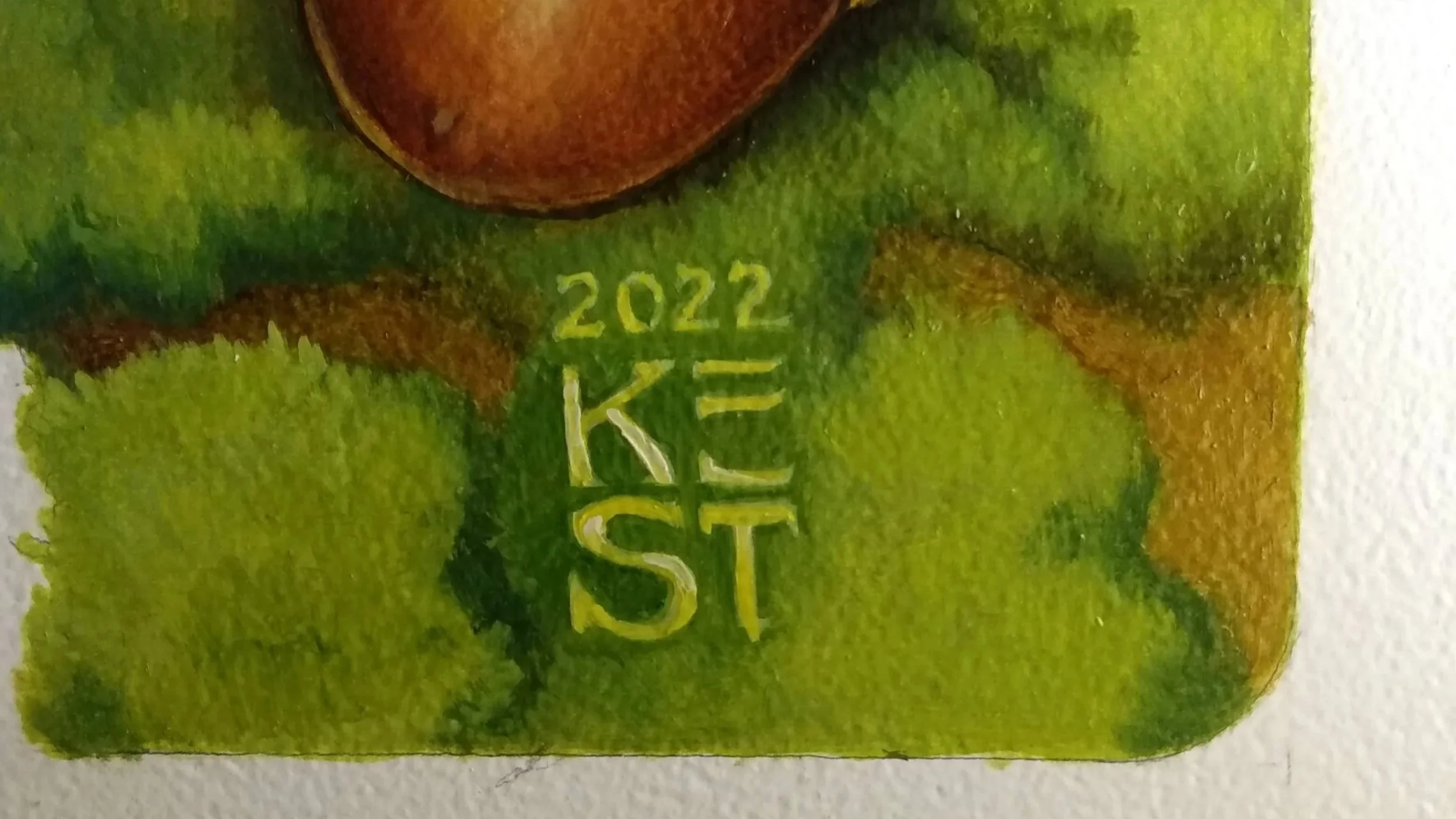
The Kest mark on my painting, Letterlocked.
III. The kestrel
As is my usual way of moving through life, I arrived at the name rather suddenly. I was drawing kestrels one afternoon and made the decision then and there — that would be my new last name. One check of the Lancaster, PA, phone book confirmed it didn't exist locally. I filed the paperwork the following week.
The American kestrel is the smallest falcon in North America — but falcon nonetheless. Not a sparrow that learned some tricks. A raptor, operating at the full capacity of its nature, simply in a more compact form than people expect. The kestrel is also the hovering one: it can hold perfectly still against the wind while it hunts, a fixed point in moving air.
I have seen one hunting exactly once in my entire life. They are resplendently gorgeous — russet and slate, precise and concentrated. That I named myself after a bird I had mostly known from drawings, and that the name turned out to be equally rare and vivid in the world, is something I find quietly satisfying.
Since then, I have seen the name in print, encountered it online, and met a handful of Kests — some of whom seemed genuinely disappointed we weren't related.
Nearly forty years. The name has outlasted the phone book I checked it in, the attorney's office where I paid for it, and at least one K-branded empire.
It's mine. I made it.
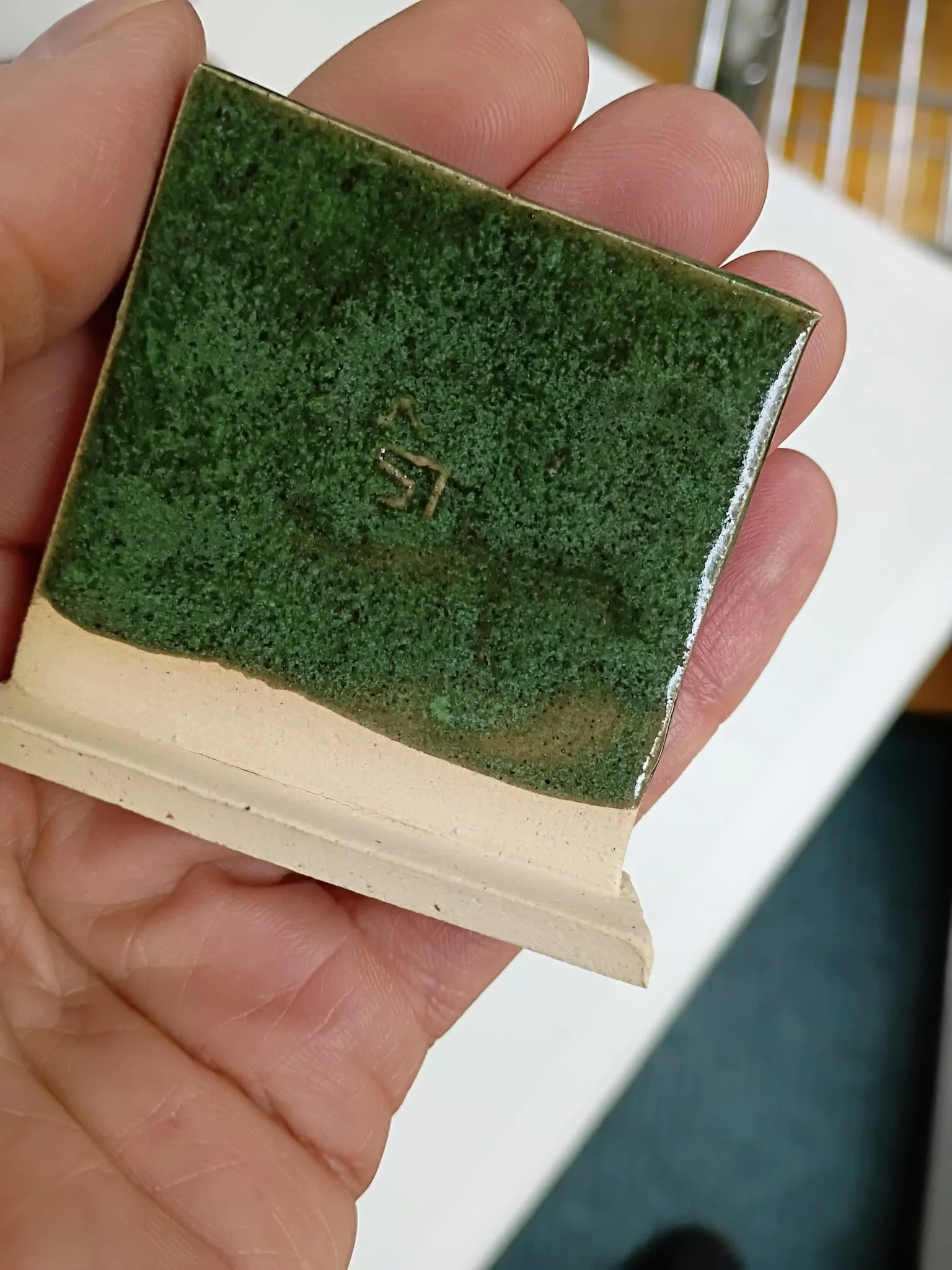
Verdure Green, a color from the new batch of glazes I’ve been testing. The fine pale particulates that shimmer within the glaze surface is from titanium rutile.
An Ecology of Color
I was testing new glazes — a project I've been building for months, reformulating my entire palette away from heavy metal oxides toward Mason stains. Safer chemistry. What I didn't anticipate was…
Read More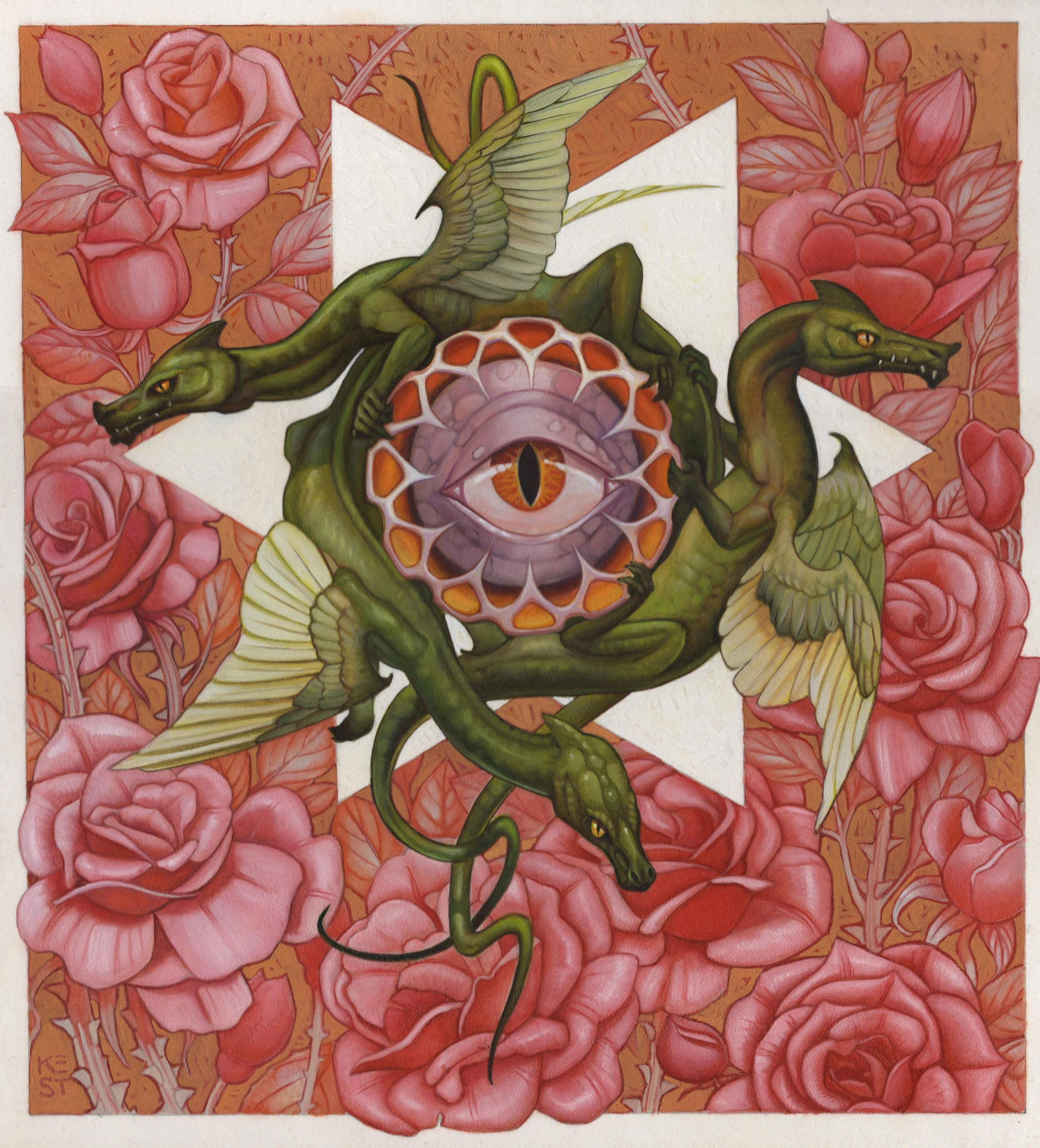
Sovereignty. Oil on board, 2025.
The Kingdom and the Queen
Your work's right to exist doesn't depend on whether you've been validated, or trained, or praised, or paid. It depends on whether you show up for it.
Read More
The Passage, oil on hardboard. 2025.
It Looks So Real: How Much Realism Do You Need?
A friend of mine and I have been arguing about realism in art. It started with a conversation about photo reference. It prompted a larger question in my mind: what makes realism meaningful in the first place? And how much of it does a viewer actually need?
Read More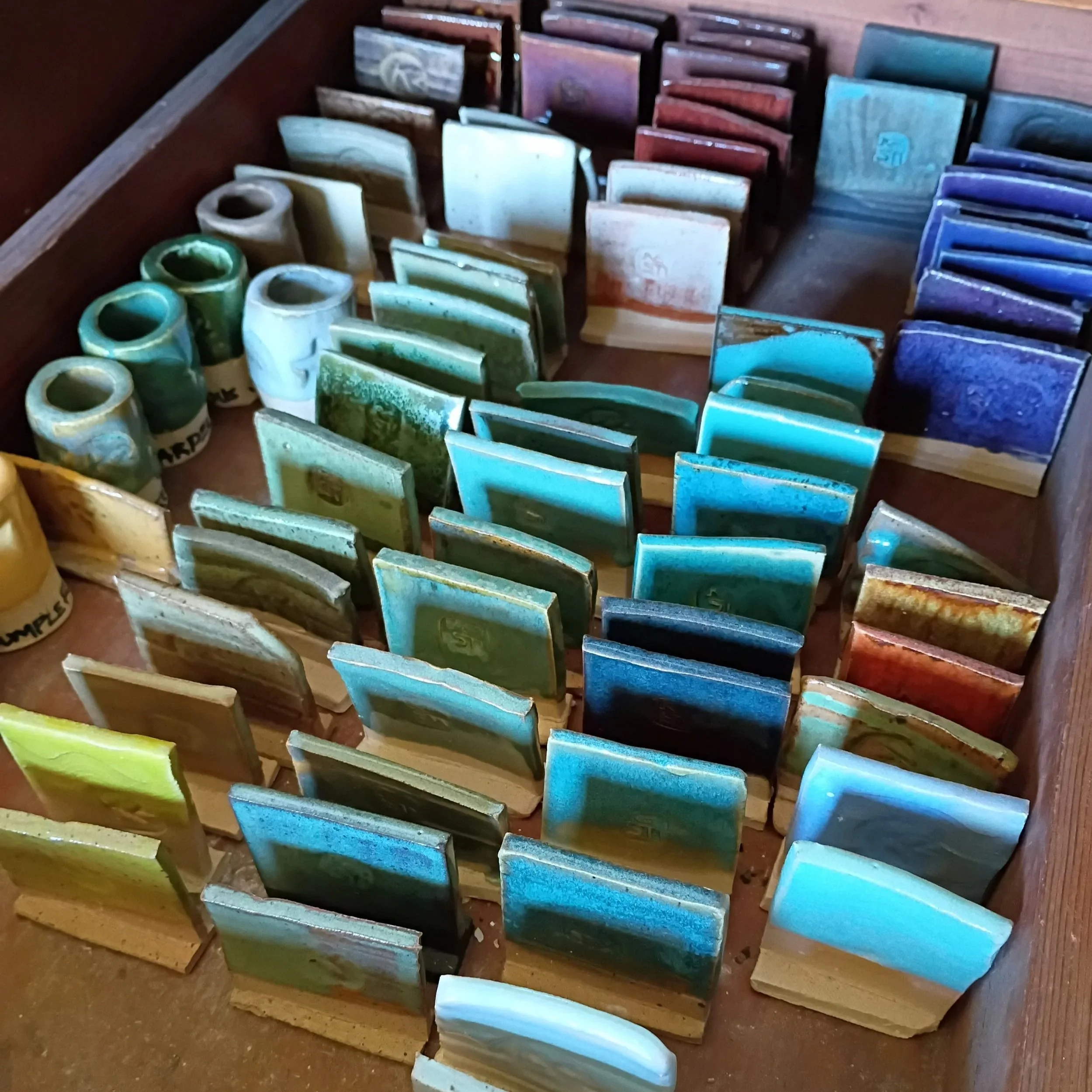
Lots of beautiful colors within the tertiary range survived the ruthless culling.
Making Pottery Glazes Part II
In 2022, I wrote about beginning to make my own pottery glazes from raw materials. Commercial bottled glazes were convenient, but expensive, and I had an itch to develop something more personal. Over five years of experimentation, I’ve come to understand the qualities I’m after…
Read More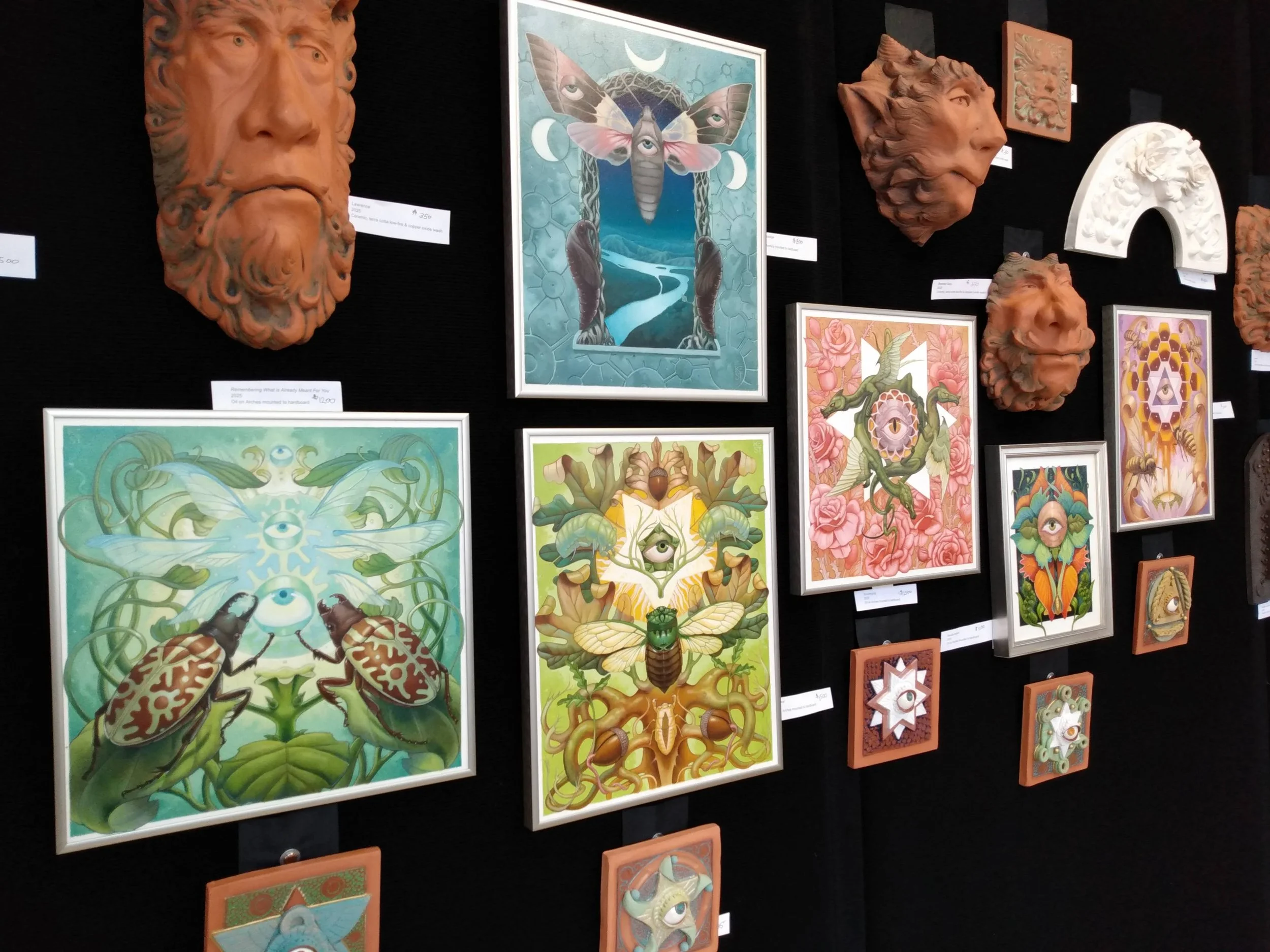
My display wall at IlluXCon where ceramics and 2-d works unabashedly mingle.
IlluXCon 2025
IlluXCon is always a wild, wonderful week—equal parts exhaustion and exhilaration. Held at the GoggleWorks in Reading, it fills three floors with some of the best Imaginative Realism artists working today, and I’m always grateful to be part of that creative storm. 2025 was no exception.
Read MoreHow to Design an Image That Holds the Eye: Principles of Strong Composition
Ever wonder why some images hold your attention while others fall flat? In this post, I share the compositional secrets that make an image unboring—and why our subconscious responds so powerfully to them.
Read More
Fall Bounty, a work that sold during the From The Forest” show.
"From The Forest" Show
The Manor Mill Gallery in Monkton, MD (say that fast three times!) was the perfect venue for From the Forest. Nestled in Maryland’s rolling hills, the Mill is surrounded by woodland and hiking trails—an ideal setting for a forest-themed show.
Read MoreBackfeeding: When One Medium Feeds Another
Some of my sigil tiles sprouted wings—so naturally, the paintings had to follow. In this post, I share how clay sketches began transforming into small oil paintings, carrying the Eye of Providence and other symbols into dreamlike new forms.
Read More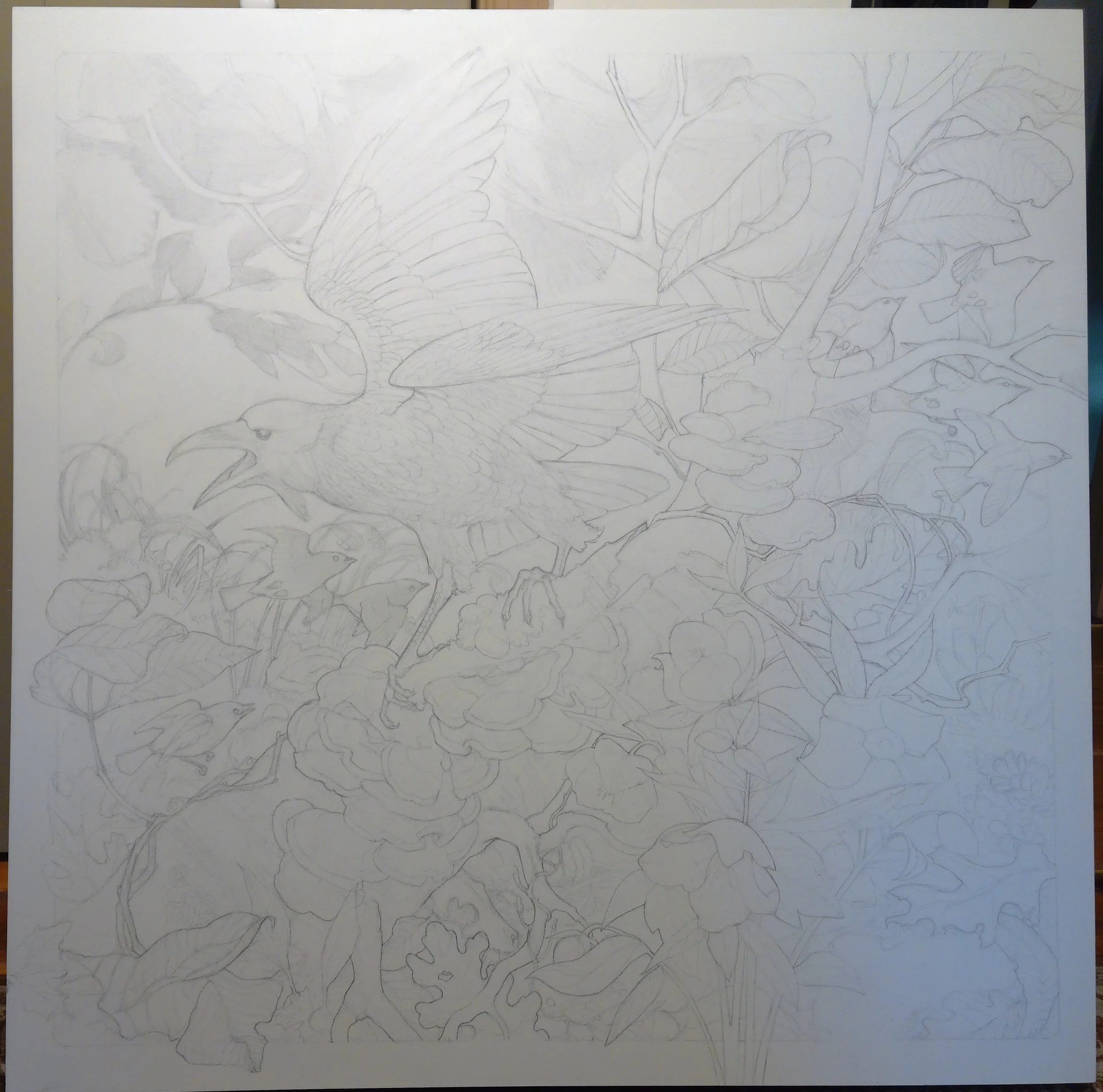
Wonderful Commission Work, Part 3: Winter
Winter is the third panel in the Seasons series for my friends, a lovely couple who now live in Arkansas. We met several years ago at an art conference and they were there as avid fans of imaginative realist art. They found my work and subsequently invited us to visit them. Sometime after that, they commissioned this series.
Read MoreSigil tiles for Lughnasadh
I’ve been having a lot of fun with the sigil series lately. I especially enjoy making them in rhythm with the seasons—letting each one echo the mood of the turning year.
Lughnasadh is a time of harvest, of gathering what’s grown, and of giving thanks for all that has carried us this far.
Read More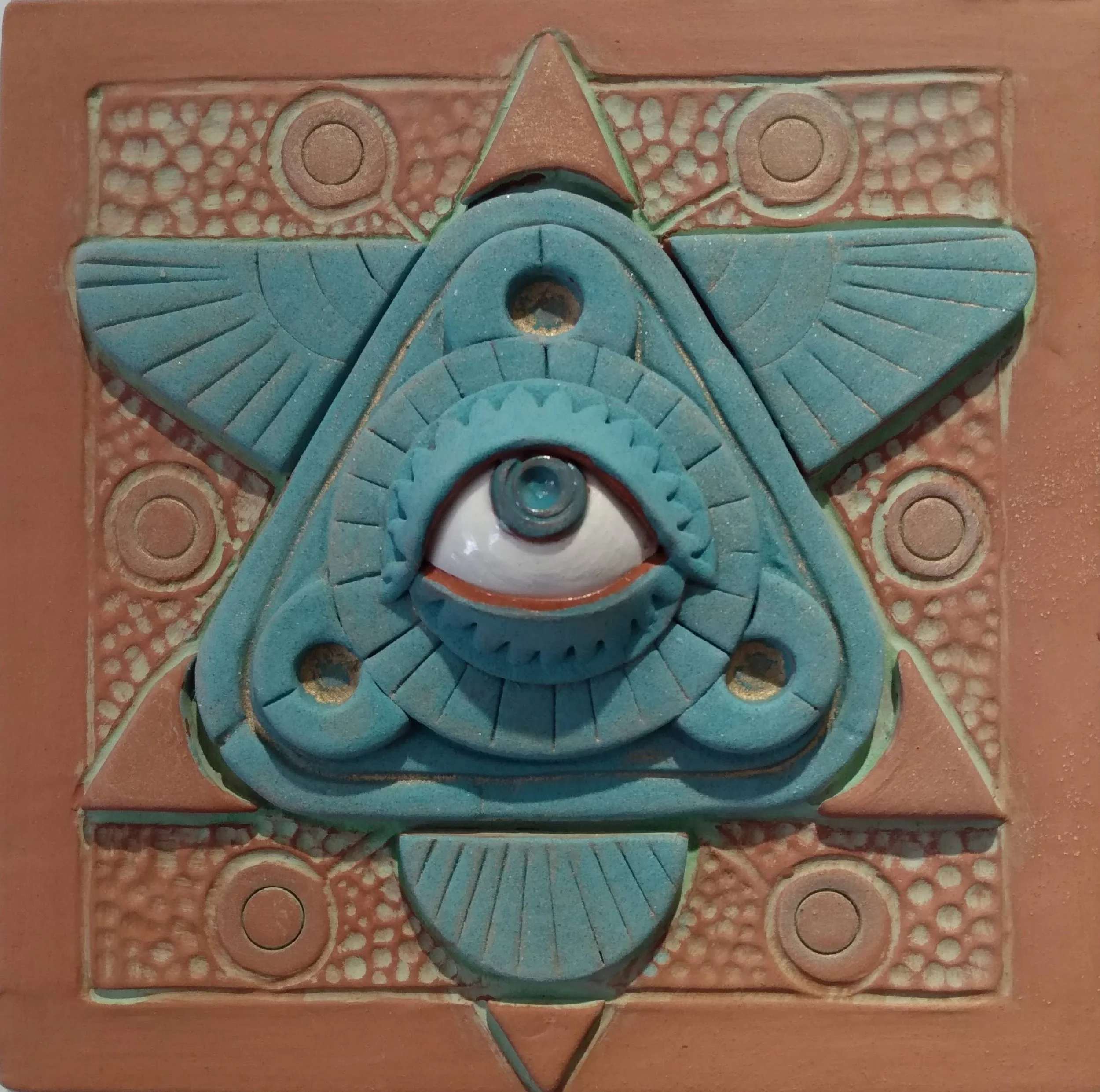
The sigil, Peace, because presence begins with a benevolent gaze. Part of the ongoing Sigil series, 2025.
"Why All the Eyes?" The Eye of Providence and its Meaning
Why do I sculpt so many eyes into my work? It’s a question I get asked a lot—sometimes nervously. The answer has more to do with protection, presence, and ancient symbolism than you might expect...
Read More
Horned God (WIP)
Out of the Forest
Scheduled for August 23rd, the exhibition, “Out of the Forest” will be held at Manor Mill Gallery in Monkton, MD. Some works in progress here.
Read More
“The Interstellar Traveler.” Black stoneware with engobe. 2025
If This Work Was Found in a Thousand Years
When I made this piece, I started thinking differently about legacy. It’s not just about me lasting. It’s about us. I want humanity to survive this perilous moment we’re living through. I want us to make it to the other side of whatever this is….
Read MoreMore sigils: 25 May 2025
The Sigils are evolving a bit into something intriguing and new. I’m planning on offering a set to mark the eight seasons of the year’s Wheel. Litha, or Midsummer, is coming up on June 21st, representing the vibrant season of light, zenith, celebration, and radiance.
Read More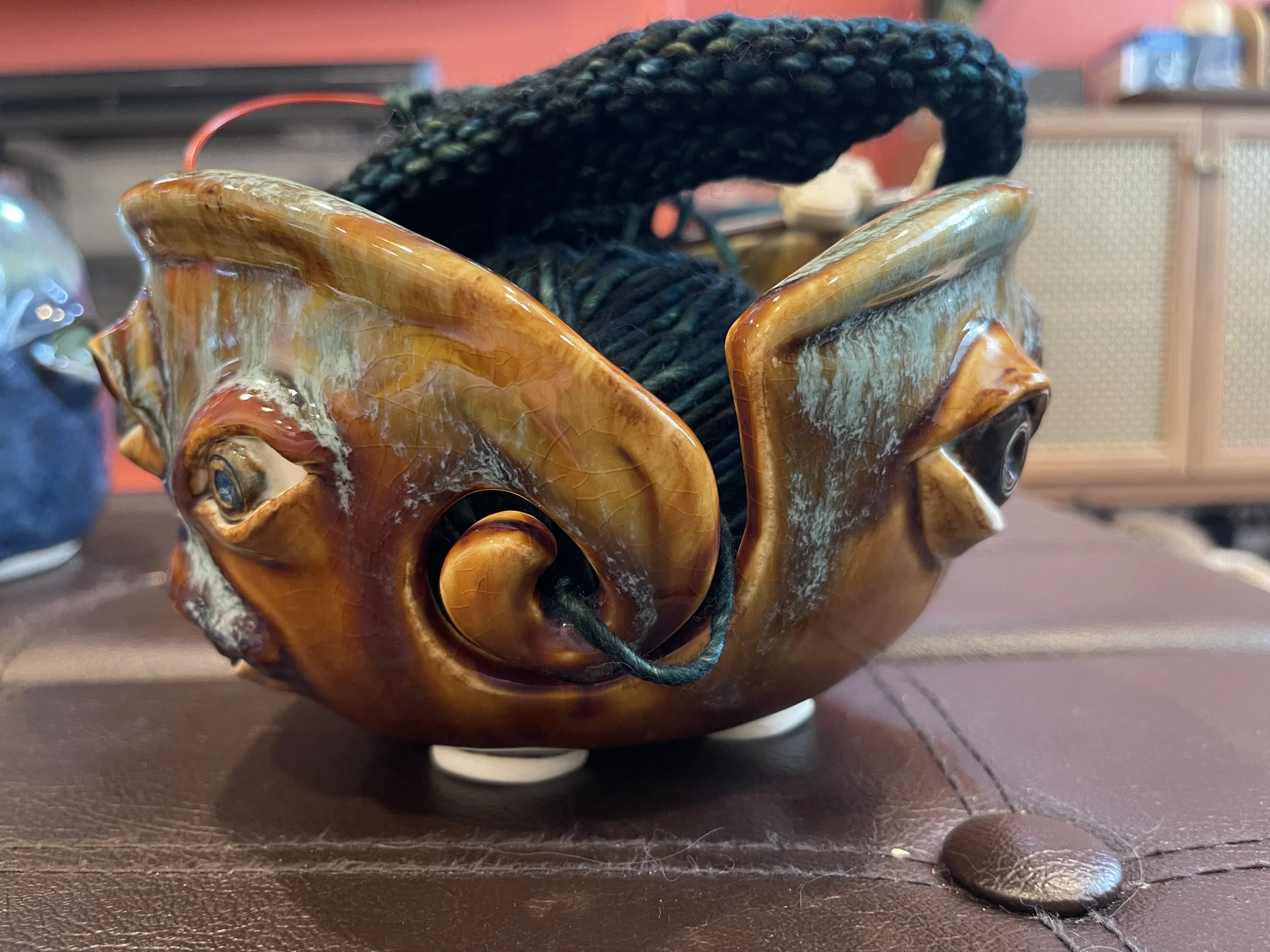
This wider-mouthed one also had a calming “Whale’s eye”.
Yarn bowls
I’d never made a yarn bowl before so when a fan of my work asked me to make her some, I was intrigued with the challenge.
Read More